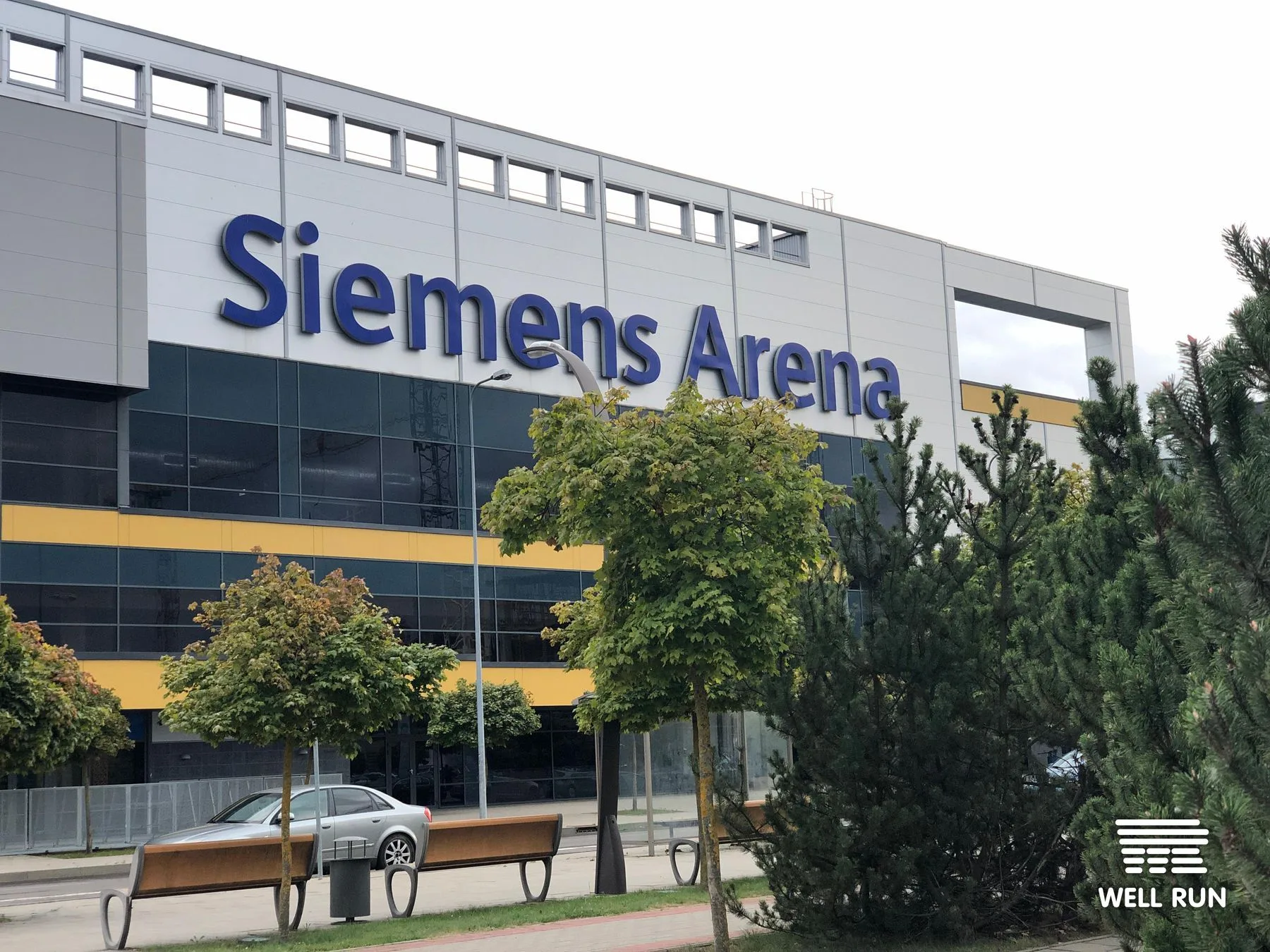
Technology

One of the first broadcasts APEX OS ever ran

In November 2017 we produced HC Bilyi Bars against HC Donbass at the rink in Bila Tserkva — two Blackmagic URSA cameras, cut live, on a system we were still building. It was our first work in Ukrainian ice hockey, and it took two years to lead anywhere.
Client
Ukrainian Hockey League (UHL)
Location
Ice Arena Bilyi Bars, Bila Tserkva, Ukraine
Date
25 November 2017
Service
Two-camera live broadcast
At a glance

Two cameras, one rink, and a production system that did not yet have a name anyone would recognise.

On 25 November 2017 we produced HC Bilyi Bars against HC Donbass in Bila Tserkva for the Ukrainian Hockey League — a UHL fixture, cut live on two Blackmagic URSA cameras. It was among the earliest productions APEX OS carried. Ten months earlier the same technology had been <a href='/en/work/fbu-2017/'>a proprietary encoder pushing a basketball signal to national television</a>. By this game it was running a broadcast.

Client
Ukrainian Hockey League (UHL)
Competition
Ukrainian Hockey League, 2017/18 season
Fixture
HC Bilyi Bars v HC Donbass
Venue
Ice Arena Bilyi Bars, Bila Tserkva, Ukraine
Date
25 November 2017
Cameras
2 × Blackmagic URSA
Service
Two-camera live broadcast
2cameras, cut live
2017one of APEX OS's earliest productions
2years before the next engagement
1first job that took two years to lead anywhere
01 — The brief

The brief

Ice hockey is the hardest of the common sports to shoot on a small rig, and it punishes shortcuts in ways football does not.

The puck is small, black, and travelling faster than anything else in team sport. The surface is white and reflective under arena lighting that was not designed for cameras. Play changes end in seconds and the line changes happen while the puck is still live. Two cameras have to cover all of that without ever being in the wrong place, because there is no third angle to cut to when they are. The Ukrainian Hockey League wanted the fixture broadcast. We wanted to find out what our own system could do under a real load, in front of a real audience, with no way to stop and fix it.

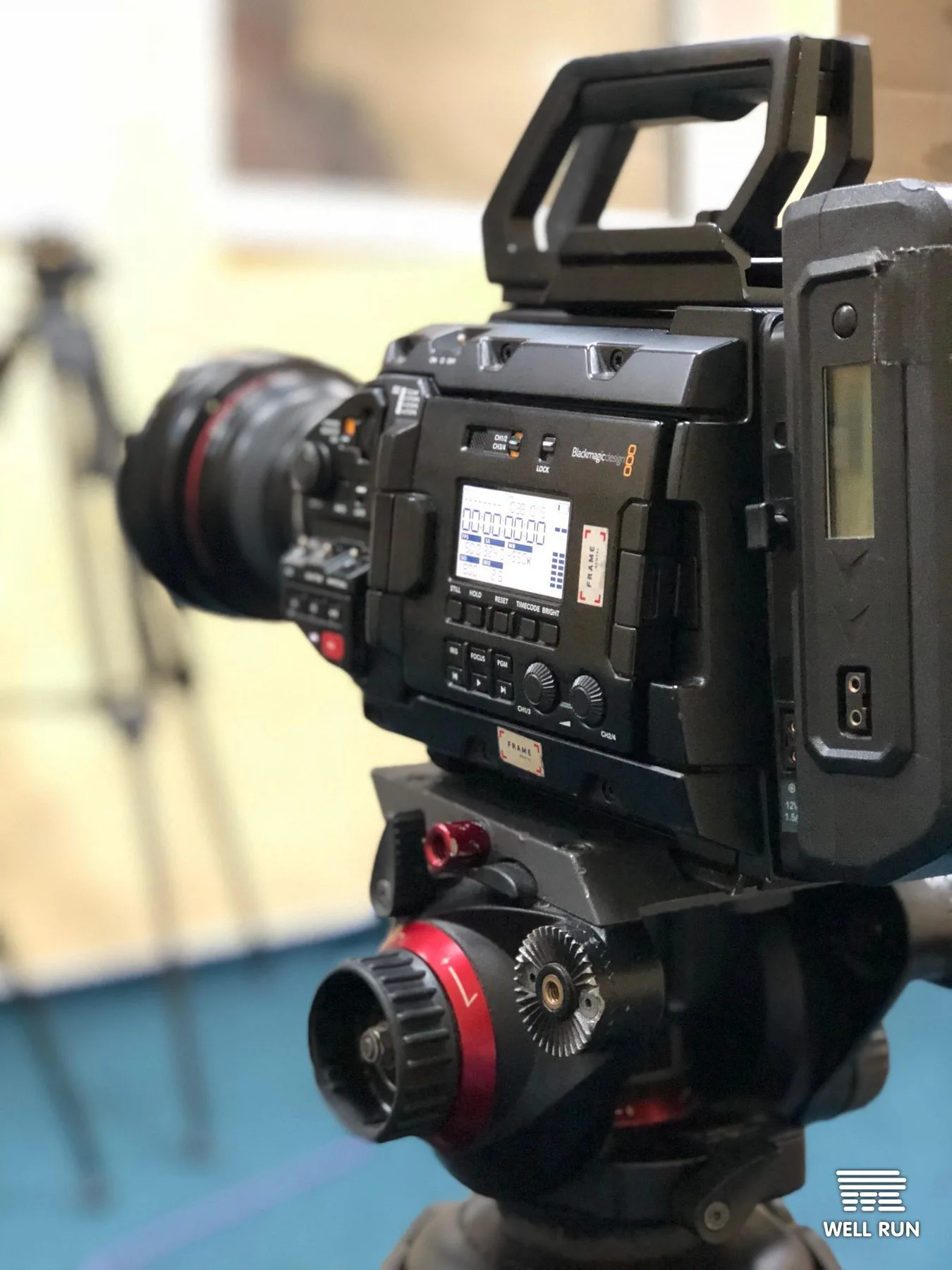
Blackmagic URSA cinema camera on tripod with Canon lens, second tripod visible in background
One of two Blackmagic URSA cameras deployed at Ice Arena Bilyi Bars.
02 — What we did

What we did

  1. 01

    Two cameras, positioned for the whole ice

    A rig this small is a set of decisions about what you are willing to lose. One camera holds the play and follows the puck. The second covers what the first cannot — the far end, the bench, the reaction — so the cut always has somewhere to go that is not a repeat of the shot it just left.

  2. 02

    Blackmagic URSA on the ice

    The URSAs gave us the latitude that ice demands. A white surface under arena light will blow out on a camera that cannot hold the range between the ice and the boards, and once it is gone in the shot it is gone in the broadcast.

  3. 03

    Cut live on an early build of APEX OS

    Switching, graphics and output ran through the system we were building for ourselves. This was one of its first outings on a live broadcast, which is a different test from a controlled one. A production system is not proven when it works. It is proven when something goes wrong during it and the broadcast does not stop.

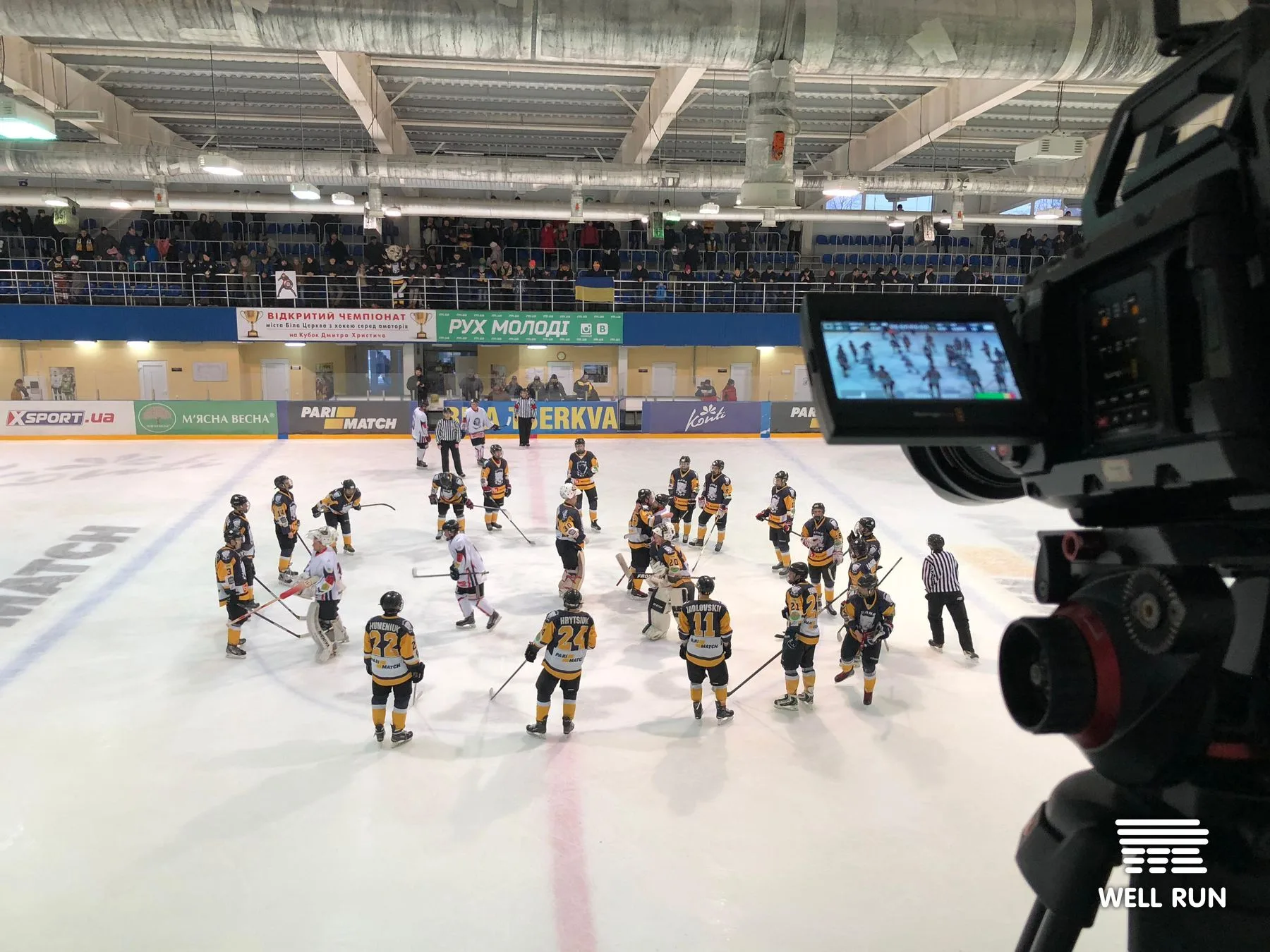
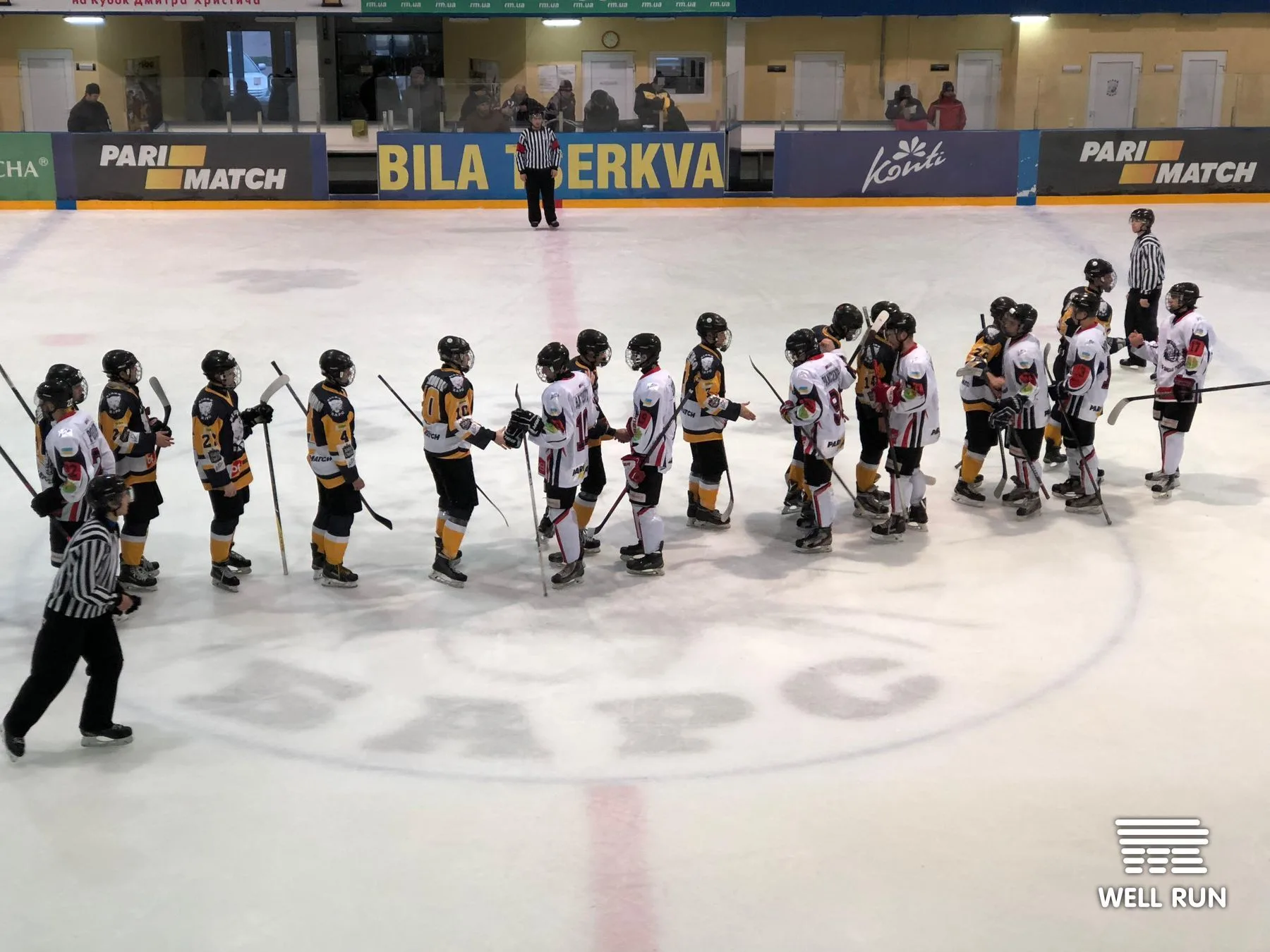
Two ice hockey teams line up for post-game handshake at Ice Arena Bilyi Bars, Bila Tserkva
Post-match handshake, HC Bilyi Bars v HC Donbass, November 2017

We were not only broadcasting a hockey game. We were finding out whether the thing we had built could hold one. — Kostiantyn Moseichenko, Well Run

Kostiantyn Moseichenko — Well Run

03 — The setup

The setup

Client
Ukrainian Hockey League (UHL)
Competition
Ukrainian Hockey League, 2017/18
Fixture
HC Bilyi Bars v HC Donbass, 25 November 2017
Venue
Ice Arena Bilyi Bars, Bila Tserkva
Cameras
2 × Blackmagic URSA
Production
Live multicam cut, graphics and output on an early build of APEX OS
Crew
Kostiantyn Moseichenko, Semen Ponomarenko and Dmytro Apilat
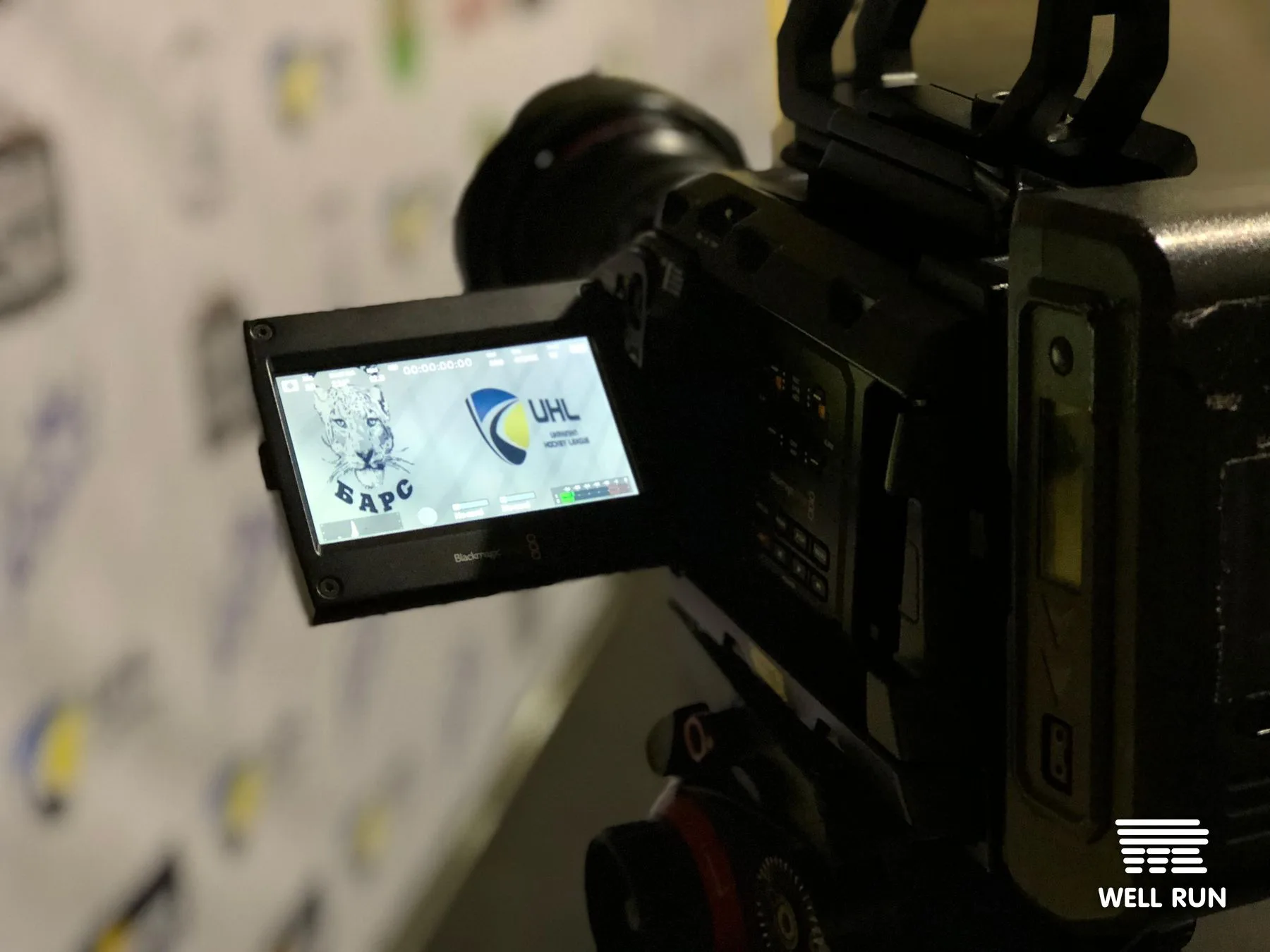
Blackmagic URSA camera monitor showing UHL and HC Bilyi Bars logos at Ice Arena Bilyi Bars
Rinkside setup for HC Bilyi Bars v HC Donbass, November 2017
Blackmagic URSA camera on tripod filming hockey players gathered on ice at Ice Arena Bilyi Bars — frame 1
Blackmagic URSA cinema camera on tripod with Canon lens, second tripod visible in background — frame 2
Two ice hockey teams line up for post-game handshake at Ice Arena Bilyi Bars, Bila Tserkva — frame 3
Blackmagic URSA camera monitor showing UHL and HC Bilyi Bars logos at Ice Arena Bilyi Bars — frame 4
04 — The outcome

The outcome

The match was broadcast. The system held.

Then nothing happened for two years.

That is the part worth saying out loud, because case studies usually skip it. A good first job does not always produce a second one. Budgets move, seasons end, people change roles, and an organisation that liked your work still has to find the moment where it needs you again. We stayed in the conversation and waited for that moment.

It came in October 2019, and from a different door — the Ice Hockey Federation of Ukraine, asking for something entirely different: a technical recording of Continental Cup matches for its coaches rather than a broadcast for an audience. From the season after that, we were producing the Ukrainian ice hockey championship live.

The rink in Bila Tserkva is where that started, on two cameras, on a system nobody outside our own company had heard of.

Questions, answered

What was Well Run's first ice hockey job in Ukraine?

A two-camera live broadcast of HC Bilyi Bars against HC Donbass for the Ukrainian Hockey League, produced at the rink in Bila Tserkva on 25 November 2017.

What was the production built on?

Two Blackmagic URSA cameras, cut live through an early build of APEX OS — our own production system, running switching, graphics and output. It was one of the first live broadcasts APEX OS carried.

Why is ice hockey difficult on a two-camera rig?

The puck is small and fast, arena lighting is not built for cameras, and the white ice will blow out against dark boards on a sensor that cannot hold the range. Play changes ends in seconds, so two cameras have to cover the whole sheet with no third angle to fall back on.

What did this engagement lead to?

Two years later, in October 2019, the Ice Hockey Federation of Ukraine engaged us for technical match recordings at the IIHF Continental Cup in Brovary. From the following season we were broadcasting the Ukrainian ice hockey championship live.

The service behind this case

APEX OS

Our production operating system for multi-camera live events.

More from the record
Your project next

Producing hockey on a small rig?

Tell us the rink, the lighting, and how many cameras you have to work with.