Sports Federation Production

A recording made for the coaches, not the audience

This one was not a broadcast. It was a full technical recording of three Continental Cup matches at Brovary Arena, made so that the coaching staff, the clubs and the Ice Hockey Federation of Ukraine could see the whole picture rather than the televised version of it.
Client
Ice Hockey Federation of Ukraine
Location
Brovary Arena, Brovary, Ukraine
Engagement
19–20 October 2019
Service
Technical match recording for analysis
Date
2019-10-19
At a glance

A television broadcast and an analysis recording are opposite products. One follows the puck. The other has to show you everything that is not the puck.

Across 19 and 20 October 2019 we recorded three matches in full at Brovary Arena — second-round Group C of the 2019/20 IIHF Continental Cup, contested by HC Donbass, Mogo Riga, Corona Brașov and Crvena Zvezda. One camera, one operator, three complete matches.

Client
Ice Hockey Federation of Ukraine
Competition
IIHF Continental Cup 2019/20 — second round, Group C
Matches
Three, including HC Donbass v Mogo Riga
Location
Brovary Arena, Brovary, Ukraine
Date
19–20 October 2019
Cameras
1
Service
Technical match recording for analysis
3matches recorded for analysis
2days at Brovary Arena
2years from first engagement to this recording
01 — The brief

The brief

Ask a coach what they want from footage and they will not describe a broadcast.

A broadcast is edited for a viewer who wants to follow the puck. It cuts to the play, tightens on the shot, replays the goal, and in doing so removes almost everything a coaching staff needs — where the other players were standing, when the change happened, how the shape held or did not hold in the twenty seconds before anything visible went wrong.

The Ice Hockey Federation of Ukraine wanted the opposite. A full match, recorded technically, showing the general picture rather than the televised one, and usable by coaches, by the clubs, and by the federation looking at the competition as a whole.

The fixture was a Continental Cup group match, which raises the stakes on the recording in a specific way. There is no second take, and the material has to be complete — a gap in an analysis recording is not a missed moment, it is a missing period of evidence.

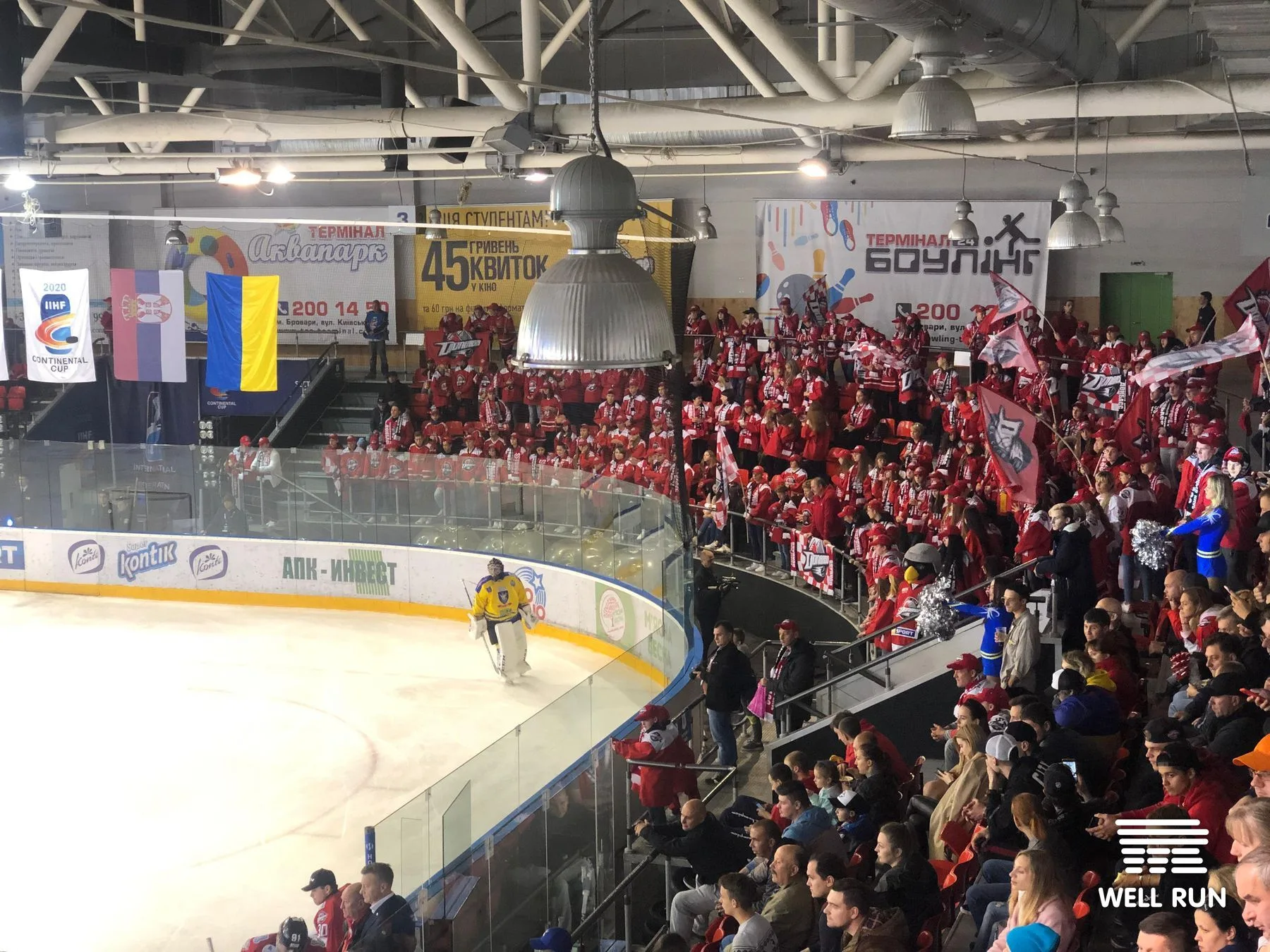
Packed Brovary Arena stands filled with red HC Donbass supporters during IIHF Continental Cup 2019
HC Donbass supporters fill Brovary Arena, IIHF Continental Cup 2019
02 — What we did

What we did

  1. 01

    Recorded three matches in full

    End to end, each of them, with nothing cut and nothing missed. An analysis recording is only worth what it is complete — and three complete matches across two days demands the same frame held from first face-off to final whistle, every time.

  2. 02

    Framed for the picture coaches need

    Not the broadcast frame. The one that keeps the players away from the puck inside the shot, so positioning, shape and movement can be read afterwards rather than inferred.

  3. 03

    One camera, one operator

    A technical recording does not need a crew. It needs the right position, the right frame, and somebody who does not leave it. One camera, run solo across all three matches.

  4. 04

    Delivered to three different readers

    The coaching staff want sequences. The clubs want their own team. The federation wants the competition. The same recording had to serve all three, which is a delivery problem as much as a camera problem.

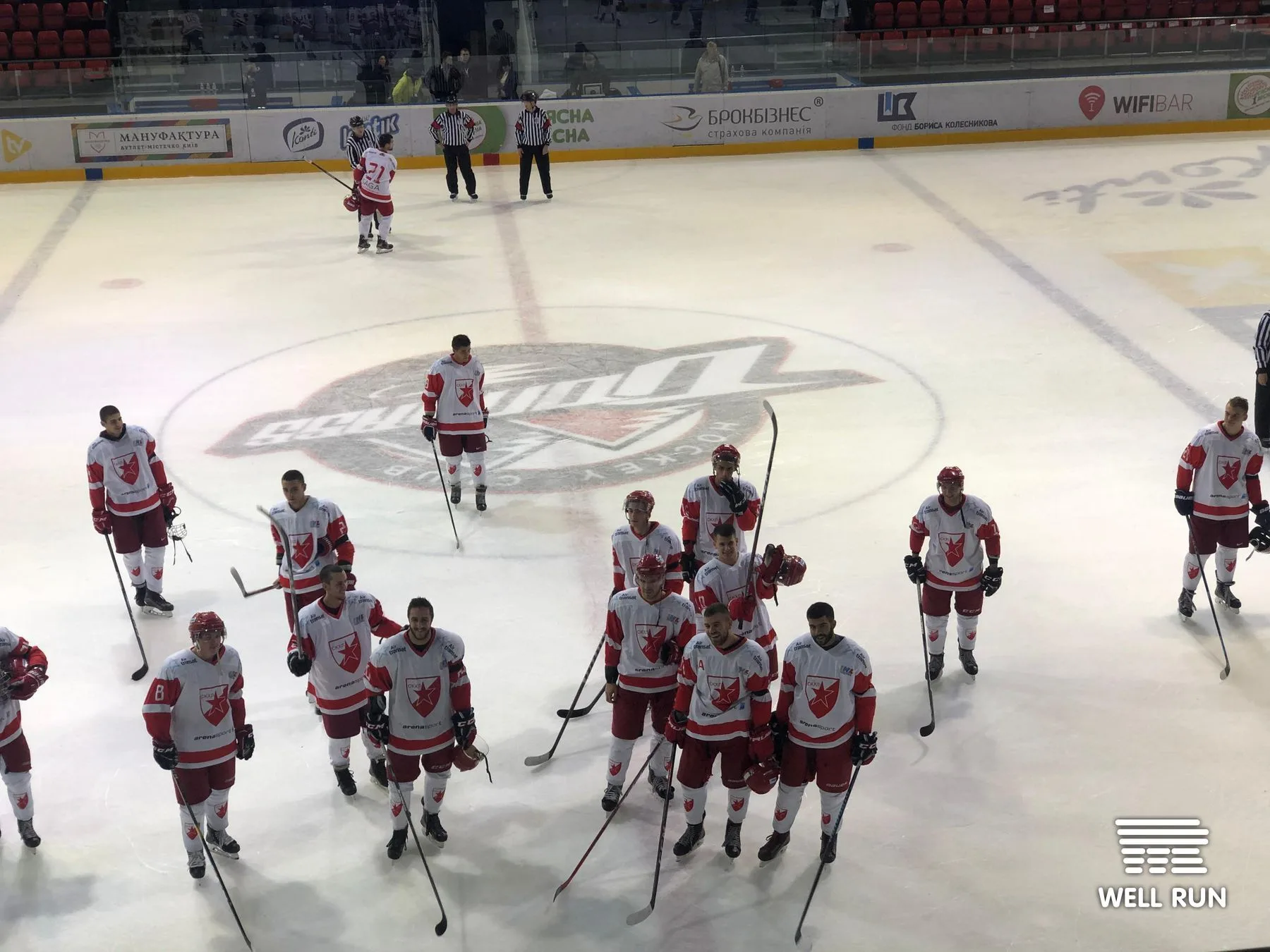
Hockey players in red and white jerseys stand on ice at Brovary Arena, Ukraine
Crvena Zvezda players on ice at Brovary Arena, October 2019

A broadcast shows you the puck. A coach needs to see the players who do not have it.

Kostiantyn Moseichenko — Well Run

03 — The setup

The setup

Client
Ice Hockey Federation of Ukraine
Competition
IIHF Continental Cup 2019/20 — second round, Group C, Brovary, 19–20 October 2019
Recorded
Three matches across 19–20 October 2019, including HC Donbass v Mogo Riga
Group
HC Donbass, Mogo Riga, Corona Brașov, Crvena Zvezda
Venue
Brovary Arena, Brovary, Ukraine
Production
Single camera, full matches, recorded for analysis — not a broadcast
For
Coaching staff, clubs, and the federation
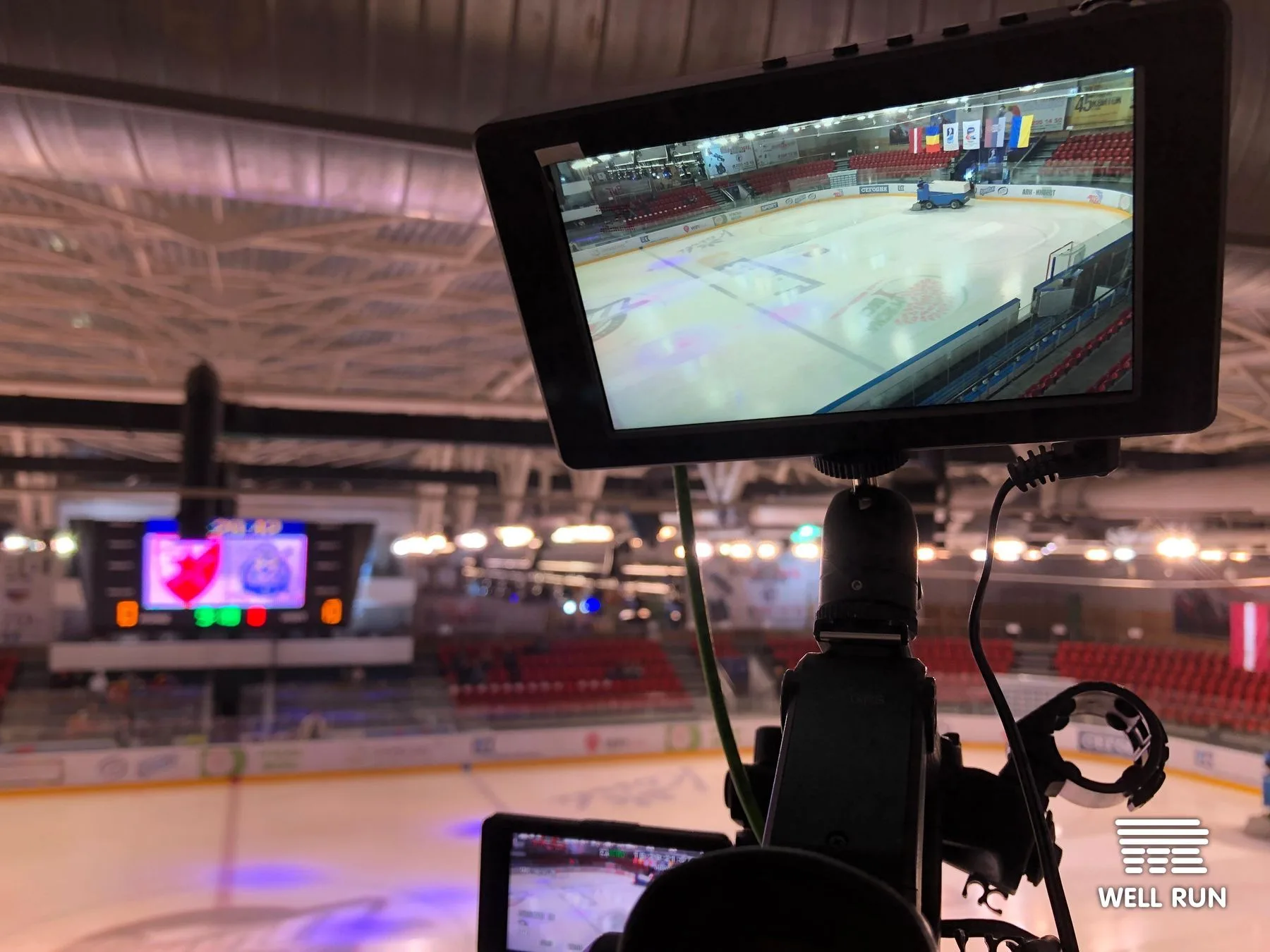
Camera monitor on tripod rig showing Brovary Arena ice surface during IIHF Continental Cup 2019 setup
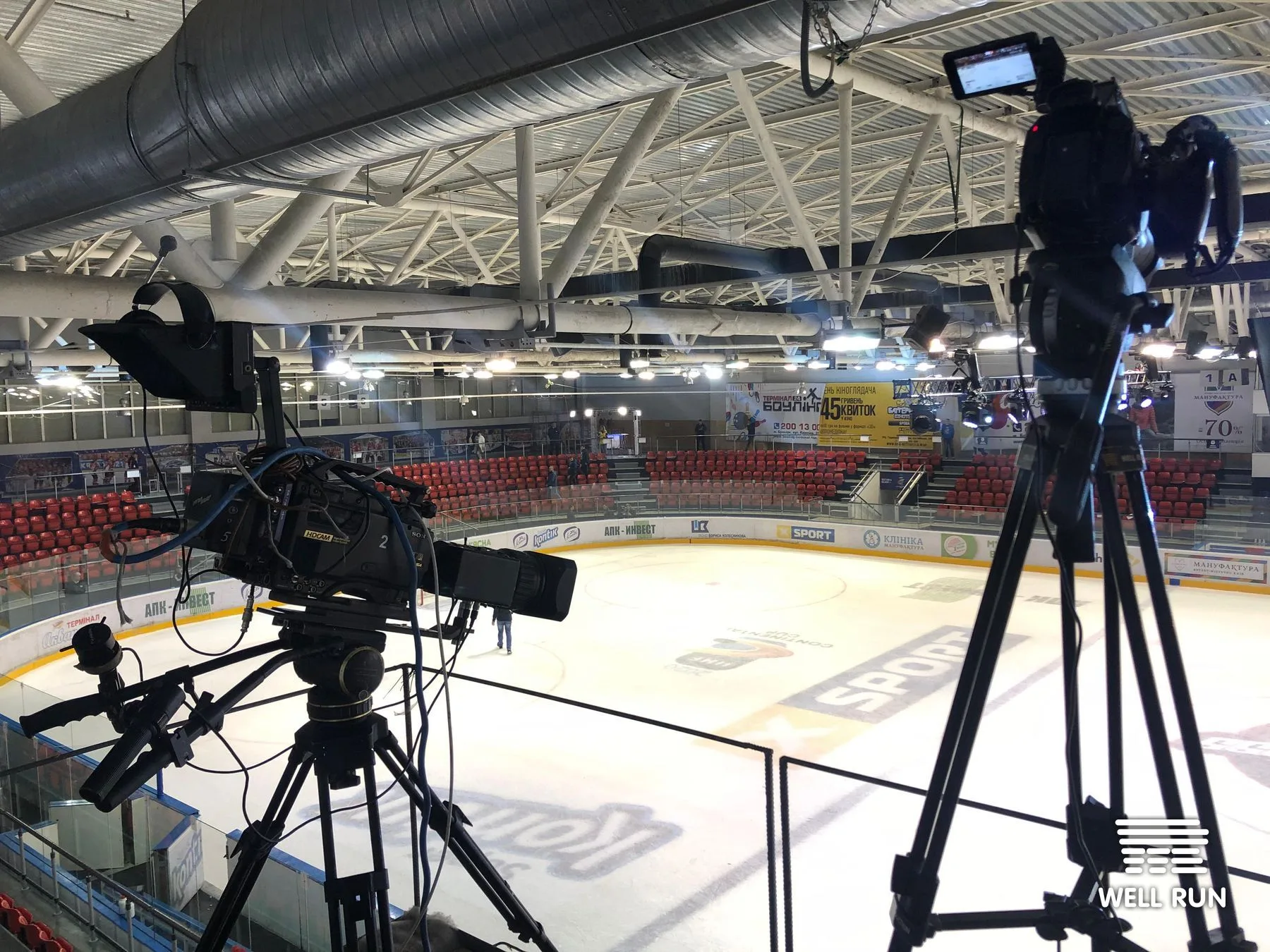
Single-camera rig ready at Brovary Arena for coaching analysis recording
Two professional video cameras on tripods positioned high above Brovary Arena ice rink, red seats visible below — frame 1
Packed Brovary Arena stands filled with red HC Donbass supporters during IIHF Continental Cup 2019 — frame 2
Hockey players in red and white jerseys stand on ice at Brovary Arena, Ukraine — frame 3
Camera monitor on tripod rig showing Brovary Arena ice surface during IIHF Continental Cup 2019 setup — frame 4
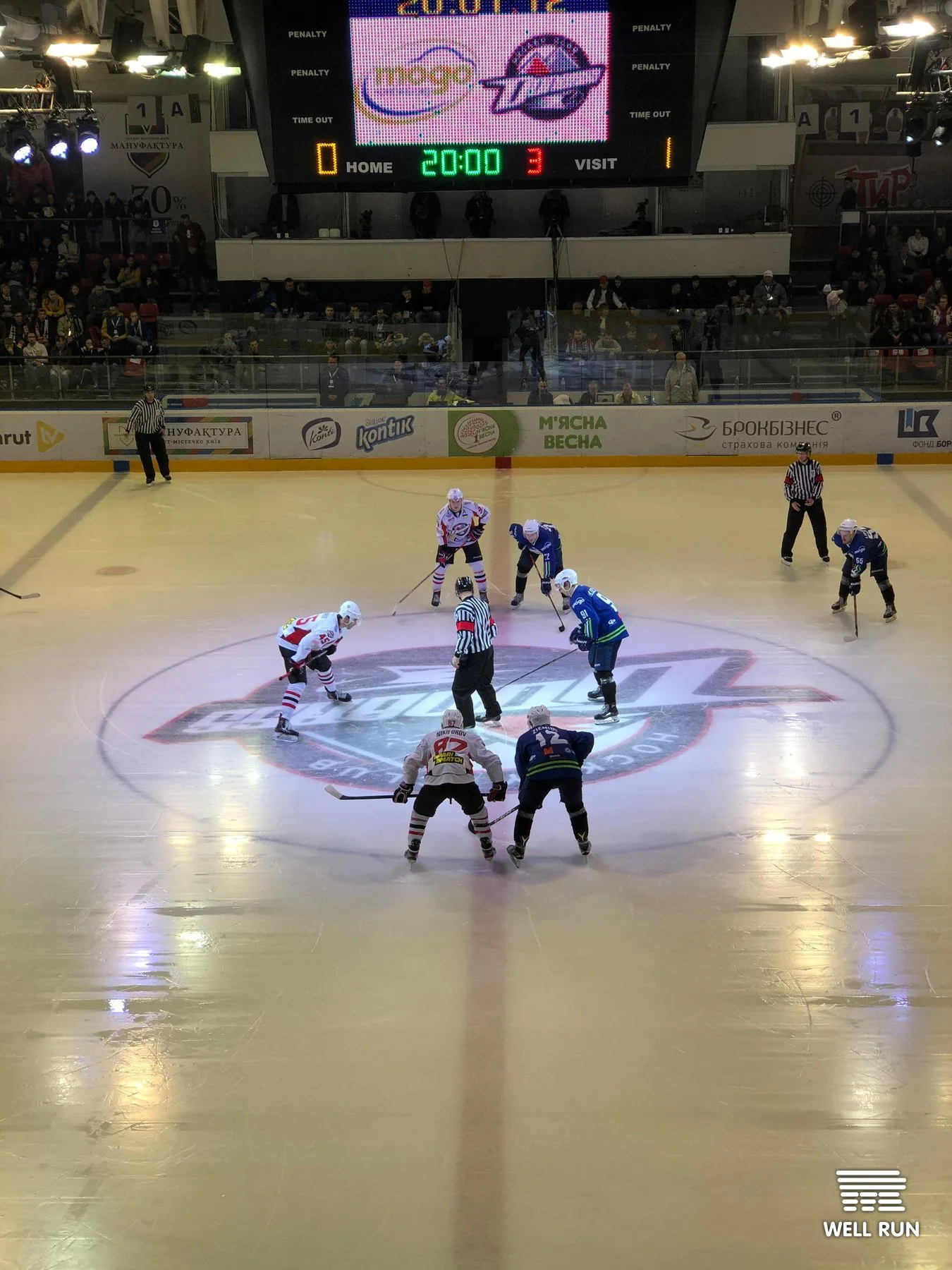
Ice hockey faceoff at centre ice, Brovary Arena, IIHF Continental Cup 2019, scoreboard reads 0-3 — frame 5
04 — The outcome

The outcome

The federation got the match on file in a form its coaches could work with.

That was the point of the job, and it was also the whole of it. There was no audience, no channel, no graphics, no live feed, and no crew. One camera, three matches, recorded properly, handed over.

From the following season we were broadcasting the Ukrainian ice hockey championship live.

That sequence is worth stating plainly, because it runs against how production work is usually sold. The job that turned a two-year conversation into a working relationship was not the showpiece. It was the unglamorous one — a technical recording nobody would ever watch for pleasure, shot solo, done to the standard the people using it actually needed.

Questions, answered

What is a technical match recording, and how is it different from a broadcast?

A broadcast is cut for a viewer following the puck. A technical recording is made for people analysing the game afterwards, so it keeps the players away from the play inside the frame and runs complete from first face-off to final whistle. Different framing, different priorities, different product.

Which matches were recorded?

Three matches of second-round Group C at Brovary Arena on 19 and 20 October 2019, including HC Donbass against Mogo Riga. The group was contested by HC Donbass, Mogo Riga, Corona Brașov and Crvena Zvezda.

Who was the recording made for?

The coaching staff, the clubs, and the Ice Hockey Federation of Ukraine, which wanted to see the competition as a whole rather than through a broadcast edit.

What did this engagement lead to?

From the following season, Well Run was producing live broadcasts of the Ukrainian ice hockey championship. The relationship had been building for two years before this recording, and it was this job — unglamorous, technically correct, delivered to the standard the people using it needed — that turned it into a broadcast contract.

The service behind this case

Broadcast & Live Streaming

Federation-standard live production, analysis recording, and multi-platform delivery — specified to what the material is actually for.

More from the record
Your project next

Need footage your coaches can actually use?

Tell us the competition and who is going to watch the material afterwards.