Sports Federation Broadcast

A show, then a fight, on the same four cameras

On 1 July 2020 we produced a combined boxing evening at Club Atlas in Kyiv — the Women's Boxing League first, then a professional card — live to Xsport, in a hall closed to spectators. The two halves wanted opposite things from the same rig, and the professional main event was over in seventy-two seconds.

Client
Women's Boxing League · Boxing Federation of Ukraine
Location
Club Atlas, Kyiv
Date
1 July 2020
Broadcast
Xsport
At a glance

Boxing came back in the summer of 2020 with nobody allowed in to watch it.

On 1 July we produced a combined evening at Club Atlas in Kyiv, organised by Myroslava Peganova, and delivered it live to Xsport — Women's Boxing League bouts first, a professional card to follow, four cameras, one crew, one continuous broadcast, and an empty hall.

Client
Women's Boxing League · Boxing Federation of Ukraine
Organiser
Myroslava Peganova
Sector
Sports Federation Broadcast
Location
Club Atlas, Kyiv
Date
1 July 2020
Cameras
4, cut live
Broadcast
Xsport
Audience
Closed doors — no spectators
Service
Four-camera live broadcast
2competitions in one evening
4cameras, one crew, one feed
1:12the professional main event, first round
0spectators in the hall
01 — The brief

01 — The brief

Three problems, and only one of them was the boxing.

The hall was empty. A closed-door event removes three things a broadcast normally borrows from the room without noticing. The crowd reaction, which is how a viewer knows a punch landed before the replay confirms it. The wide shot — a full room reads as an occasion, an empty one reads as a rehearsal, so the angle that usually establishes the event now undermines it. And the sound, because the noise of a hall covers everything, and without it what remains is the corner, the referee, the ropes and the impact, suddenly audible in a way they never usually are.

The evening was two competitions, not one. The Women's Boxing League was launched in Ukraine in 2018 and presented at the time as the first of its kind in the world. It is built as a show — its athletes chosen for charisma and presence as well as ability, its evenings written rather than merely scheduled. That asks a production for entrances, shape, and a sense of occasion. The professional card that followed asks for none of those things and cannot be given them. It asks only that the camera is in the right place when something happens, and it does not tell you when that will be.

It was going to national television. Xsport was carrying the evening, which sets the floor. A channel takes a feed to air or it does not, and there is no version of the night where the production is nearly good enough.

Underneath all three, boxing on a small rig is unforgiving for its own reasons. Everything happens inside a few square metres, so there is no change of scenery to cut away to and every angle has to be usable at every moment. On 1 July that stopped being an abstraction. The professional main event lasted seventy-two seconds.

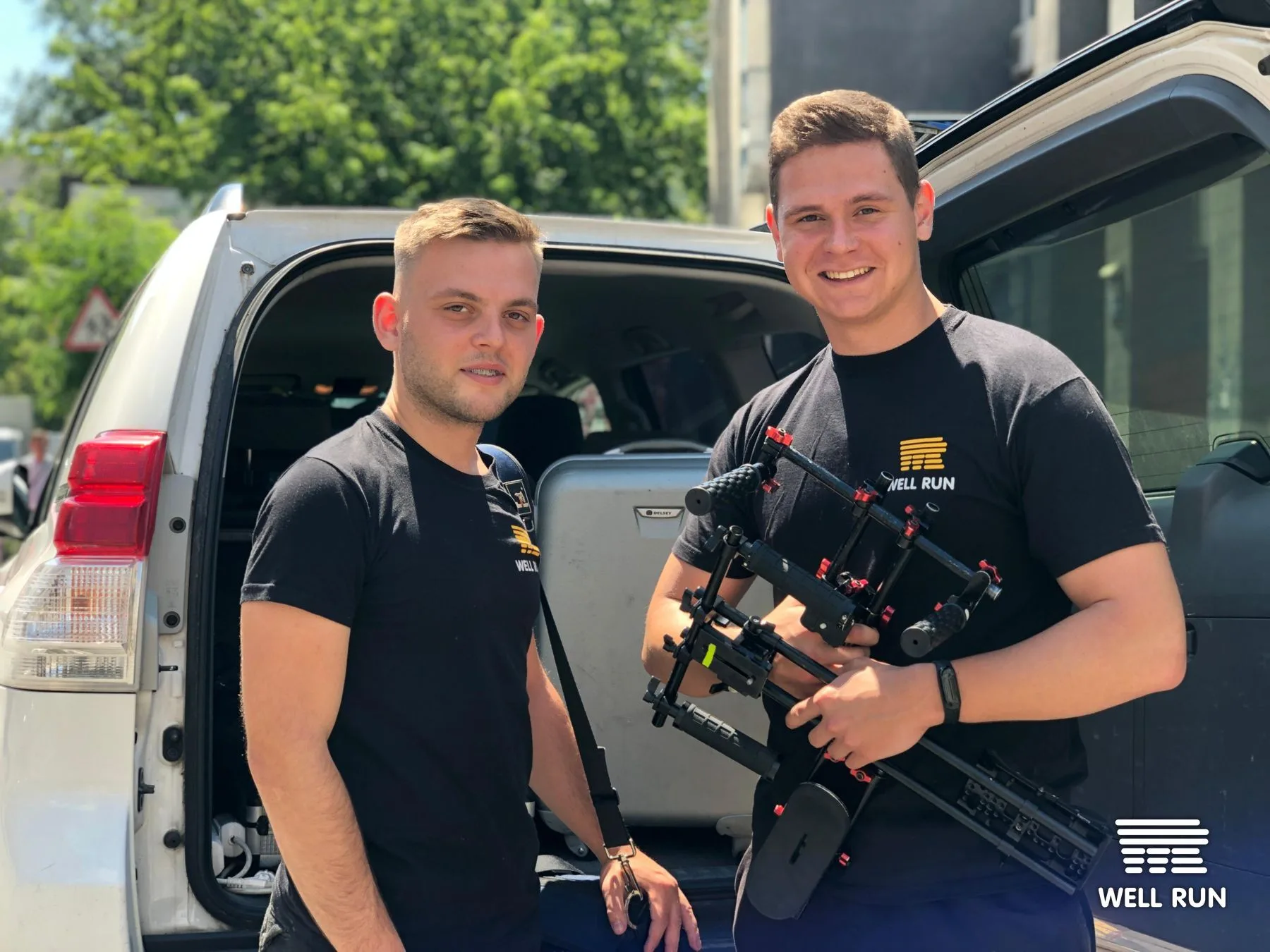
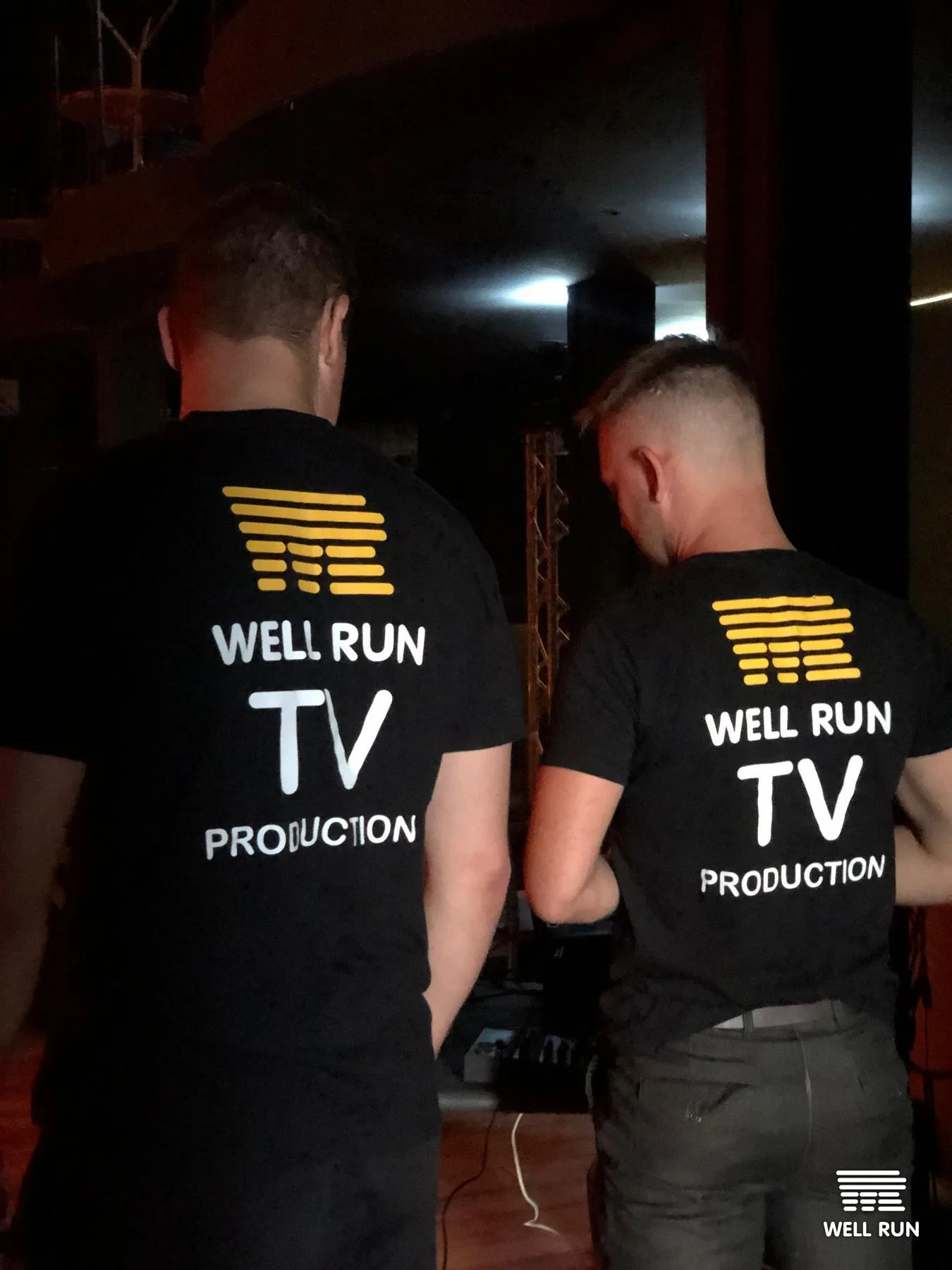
Two young male crew in Well Run black t-shirts holding camera stabiliser rig beside white SUV
Well Run crew ready for production at Club Atlas, Kyiv
02 — What we did

02 — What we did

  1. 01

    01 · One rig, positioned for the ring rather than the room

    With no crowd to establish, the wide shot has to earn its place differently. The positions held the ring as the subject — the full square for shape and distance, the tighter angles for the exchanges, the corner for the seconds between rounds. Nothing pointed at empty seats, in either half of the night.

  2. 02

    02 · Two productions from one set of cameras

    The League half was cut as a show: the entrances, the shape of each bout within the evening, the moments the format is built around. The professional half was cut as sport: read the fight, stay on it, and be right the first time. Same four positions, same crew, a different job an hour apart, with no break to rebuild anything.

  3. 03

    03 · Every angle live from the first bell of the pro card

    A card where the top fight can end in the first round is not a card you ease into. There is no settling period and no opening round to find the rhythm on. Every camera was on its final framing before the bell, because the alternative is discovering the position was wrong at the moment it stops being fixable.

  4. 04

    04 · Cut live to a national channel

    The feed went to Xsport as it happened. A broadcaster's requirements are not a matter of taste — the signal is stable and correctly specified or the channel does not take it. That standard applied across the whole evening, both competitions, not only the headline fight.

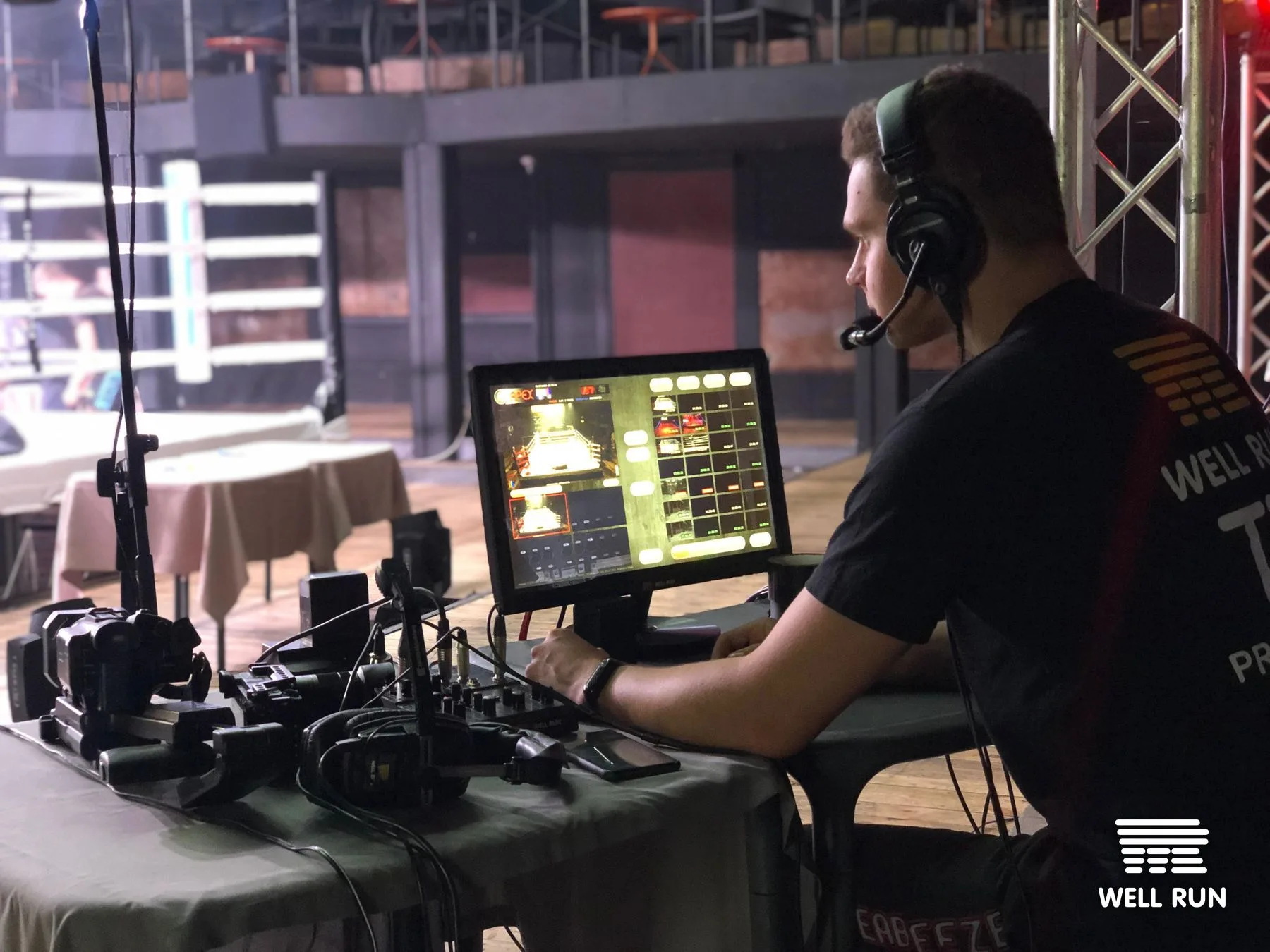
Technician wearing headset monitors multi-camera feed on screen at ringside production desk, Club Atlas Kyiv
Ringside production desk during Women's Boxing League broadcast, Club Atlas Kyiv

The first half of the night wanted a show. The second half gave us seventy-two seconds. Same cameras, same people. — Kostiantyn Moseichenko, Well Run

Kostiantyn Moseichenko — Well Run

03 — The setup

03 — The setup

Clients
Women's Boxing League · Boxing Federation of Ukraine
Organiser
Myroslava Peganova — vice-president, general manager and co-founder of the Women's Boxing League
Format
Combined evening — Women's Boxing League bouts, followed by a professional card
Professional main event
Aram Faniian v Nazir Bakhshiyev, scheduled 8 rounds — knockout at 1:12 of round one
Venue
Club Atlas, Kyiv
Date
1 July 2020
Audience
Closed doors, no spectators
Cameras
4, cut live
Broadcast
Xsport
Camera crew
Kostiantyn Moseichenko, Semen Ponomarenko, Andriy Kuztentsov, Anatoliy Kravetskyy
Broadcast direction
Dmytro Apilat
Broadcast engineering
Mykola Moseichenko
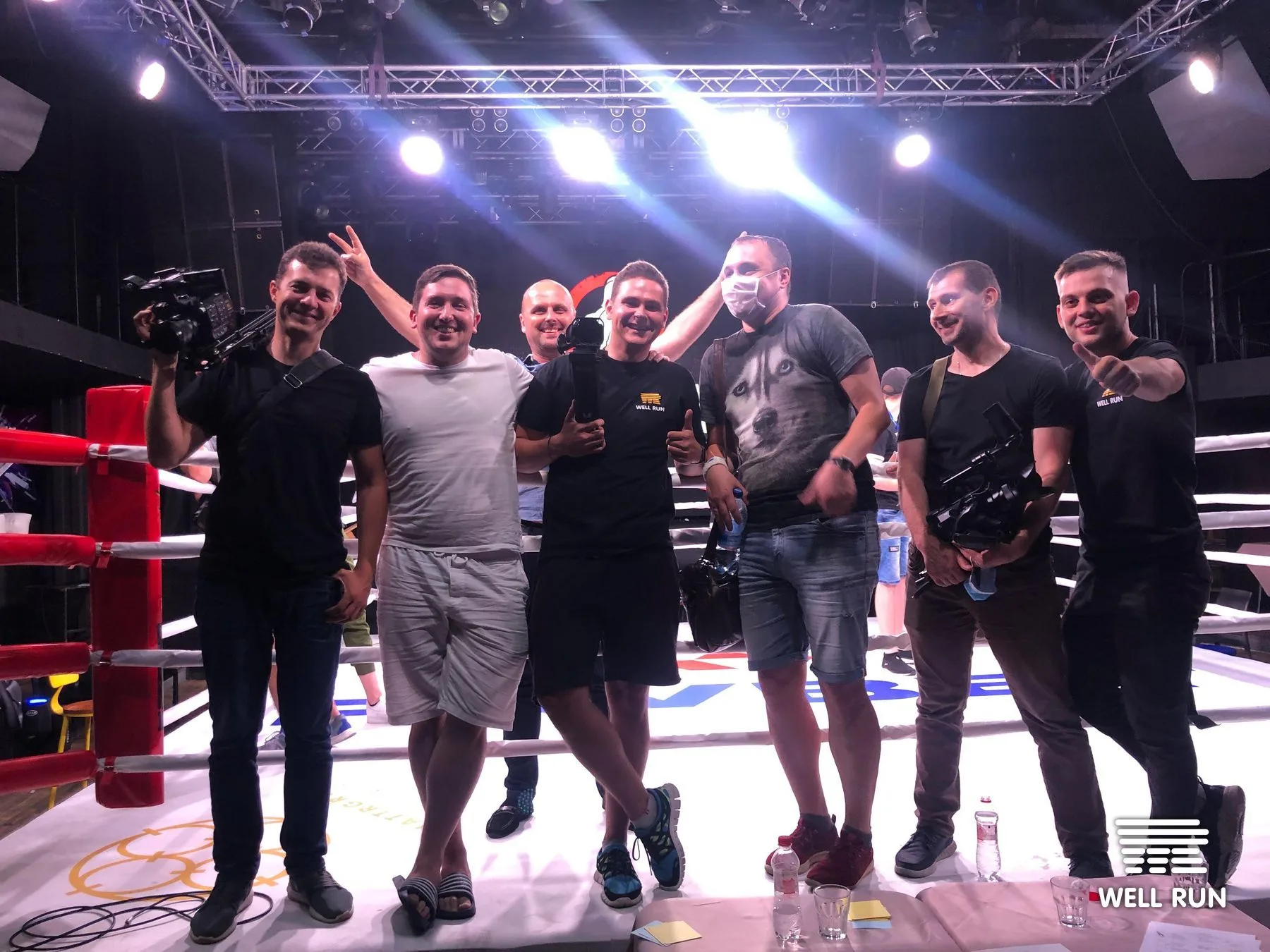
Seven-person Well Run production crew smiling ringside at Club Atlas boxing venue, Kyiv
The Well Run crew ringside at Club Atlas, Kyiv.
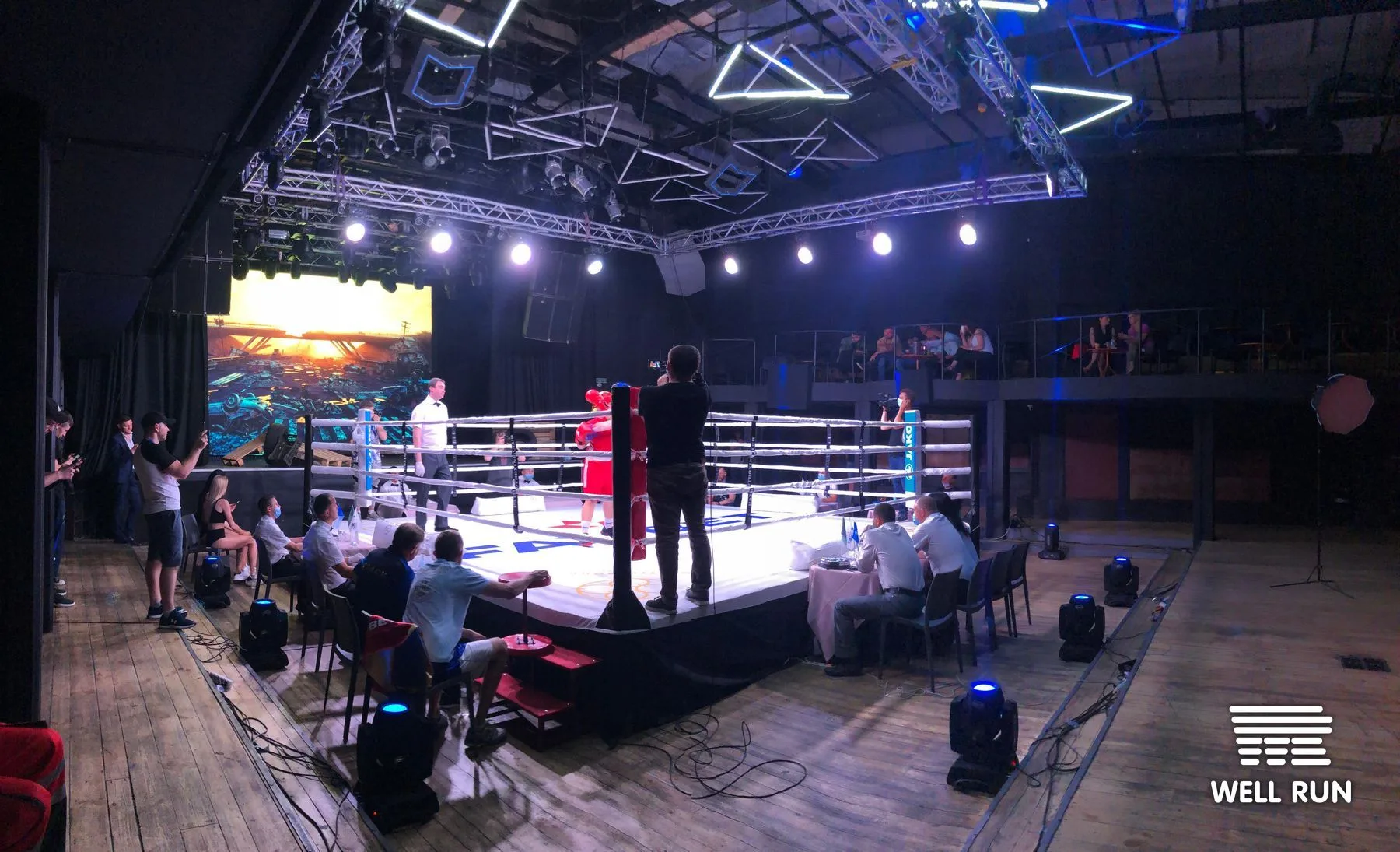
Boxing ring at Club Atlas Kyiv with two fighters, referee, ringside judges, and camera operator — frame 1
Two young male crew in Well Run black t-shirts holding camera stabiliser rig beside white SUV — frame 2
Technician wearing headset monitors multi-camera feed on screen at ringside production desk, Club Atlas Kyiv — frame 3
Seven-person Well Run production crew smiling ringside at Club Atlas boxing venue, Kyiv — frame 4
Two crew members in Well Run TV Production shirts seen from behind at Club Atlas Kyiv — frame 5
04 — The outcome

04 — The outcome

The evening was produced in full and carried live by Xsport, from a hall with nobody in it.

Two things are worth keeping from it.

The first is that one rig covered two competitions that wanted opposite things, back to back, without a rebuild. That is not a scheduling detail. Combining a show-format league with a professional card is how a promoter fills an evening and shares a cost, and it only works if the production can change what it is doing halfway through. Four cameras and six people did both halves.

The second is the seventy-two seconds. Faniian and Bakhshiyev were scheduled for eight rounds and the fight ended in the first, and the entire audience for it was watching through four cameras and a live cut, because there was no audience in the building.

That is a useful way to think about what a broadcast actually is. Most sport treats it as coverage — a record of the event, made for people who could not attend. The framing survives right up until the room empties, and then it collapses, because coverage of nothing is nothing. On 1 July 2020 the broadcast was not a second view of the boxing. It was the only place the boxing existed.

Questions, answered

What did Well Run produce at Club Atlas on 1 July 2020?

A four-camera live broadcast of a combined boxing evening in Kyiv, organised by Myroslava Peganova — Women's Boxing League bouts followed by a professional card, delivered live to Xsport with no spectators in the hall. The professional main event, Aram Faniian against Nazir Bakhshiyev, ended by knockout at 1:12 of the first round.

How do you cover two different competitions on one night with one rig?

By deciding in advance what each half is. The League bill is built as a show, so it is cut for entrances, shape and occasion. The professional card is sport with no narrative obligation, so it is cut for the action and nothing else. Same camera positions, same crew, two different jobs an hour apart, with no break to rebuild.

What changes when a sports event has no crowd?

Three things the broadcast normally borrows from the room disappear: the crowd reaction that tells a viewer a punch landed, the wide shot that reads as an occasion, and the sound. The production has to supply all three itself, which means different camera positions, a different cut, and attention to audio that a full hall would otherwise have covered for you.

Was the broadcast carried on television?

Yes. Xsport took the feed live across the whole evening. A broadcaster either accepts a signal or it does not, so the specification and stability of the output had to meet a channel's requirements for both competitions, not only the headline fight.

The service behind this case

Broadcast & Live Streaming

Federation-standard live production and multi-platform delivery — specified to who is watching, and from where.

More from the record
Your project next

Two competitions on one bill, or an audience that cannot be in the room?

Tell us the venue, the format, and where people will be watching from.