Sports Federation Broadcast

A national championship, every Friday, for twenty weeks

Superball is the Ukrainian championship at 6×6. We produced its 2019/2020 season at Hydropark Arena in Kyiv — a full round every Friday as one continuous four-camera broadcast, live to three national channels and to the competition's own audience at the same time.

Client
Superball — Socca championship of Ukraine, 6×6
Location
Hydropark Arena, Kyiv — outdoor
Engagement
2019/2020 season — opened 13 September 2019, 20 weeks
Service
Live broadcast production, TV graphics, multi-platform distribution
Date
2019-09-13
At a glance

Ten clubs, playing each other home and away, then the finals — around ninety matches across a single season, every one of them produced.

Each Friday was one broadcast, not five: four cameras, live cutting, instant replay and the full graphics package, running four hours and more without leaving air while the round played out in front of it.

Client
Superball — Socca championship of Ukraine, 6×6
Organiser
Mistosporty
Venue
Hydropark Arena, Kyiv — outdoor
Season
2019/2020, opened 13 September 2019, 20 weeks
Format
10 clubs, home and away, then finals — 18 rounds of 5 matches
Cameras
4-camera multicam, one continuous feed per round
Distribution
Xsport, Sport 1, Setanta Sports (by fixture); YouTube and Facebook every round
Service
Live broadcast production, TV graphics, multi-platform distribution
90league matches across the season
20weeks, September to the finals
4cameras, one continuous feed per round
3national broadcasters carrying the championship
01 — The brief

01 — The brief

A championship is not a fixture. It is the same production, repeated until the season ends, and it has to hold on the twentieth Friday as well as the first.

Superball runs ten clubs at 6×6. Every club plays every other club twice, which is eighteen rounds of five matches before the finals begin. The competition needed television-standard output for the fixtures the broadcasters were taking, and it needed the whole round produced whether television was taking it or not.

It also plays outdoors. Hydropark Arena is an open ground, and the season runs from September onwards, which means the production has to work in afternoon light, under floodlights, and in whatever the weather does in between.

We knew the ground. Earlier that year we had been official broadcaster for the Klitschko Cup at the same arena, for the same organiser, Mistosporty — twelve matches across two days to six countries. Superball asked for that standard every week for five months.

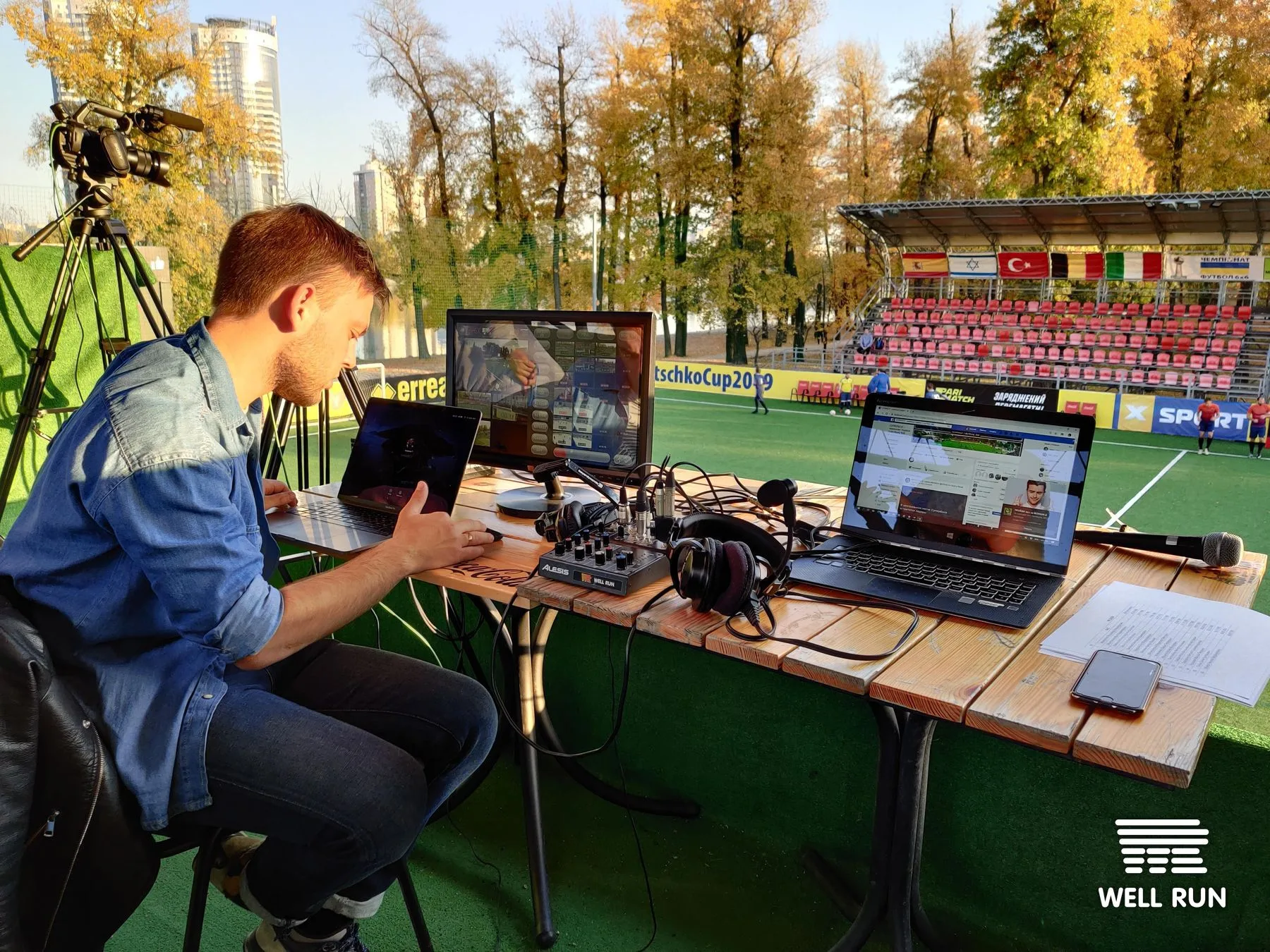
Kostiantyn Moseichenko operating multicam broadcast desk pitchside at Hydropark Arena Kyiv during Superball Socca championship
Live production desk, Superball Socca Championship, Hydropark Arena 2019
02 — What we did

02 — What we did

  1. 01

    One continuous broadcast per round

    Not five separate streams. Four cameras, live cutting, instant replay and full graphics, on air from the first whistle of the round to the last — four hours and more in a single unbroken feed. A viewer arriving for the third match of the evening joins a broadcast already running, the way they would on a sports channel.

  2. 02

    Four cameras, outdoors, every week

    A four-camera multicam rig built and struck at an open arena, twenty times across a season that starts in early autumn. The sun in September and the floodlights in November are different problems, and the broadcast has to look like the same competition in both.

  3. 03

    Three national broadcasters, and everyone else, at once

    Xsport, Sport 1 and Setanta Sports each took fixtures across the season. The same production fed all of them and went out live on YouTube and Facebook alongside, so the clubs whose match was not on television that week were not on a downgraded feed.

  4. 04

    A graphics package built for the competition

    We designed and animated Superball's full TV package — scores, clocks, club identities, round and season framing — and ran it on every match of every round. That is what makes ninety separate matches read as one championship, and it is what a broadcaster expects to see before it puts a competition on air.

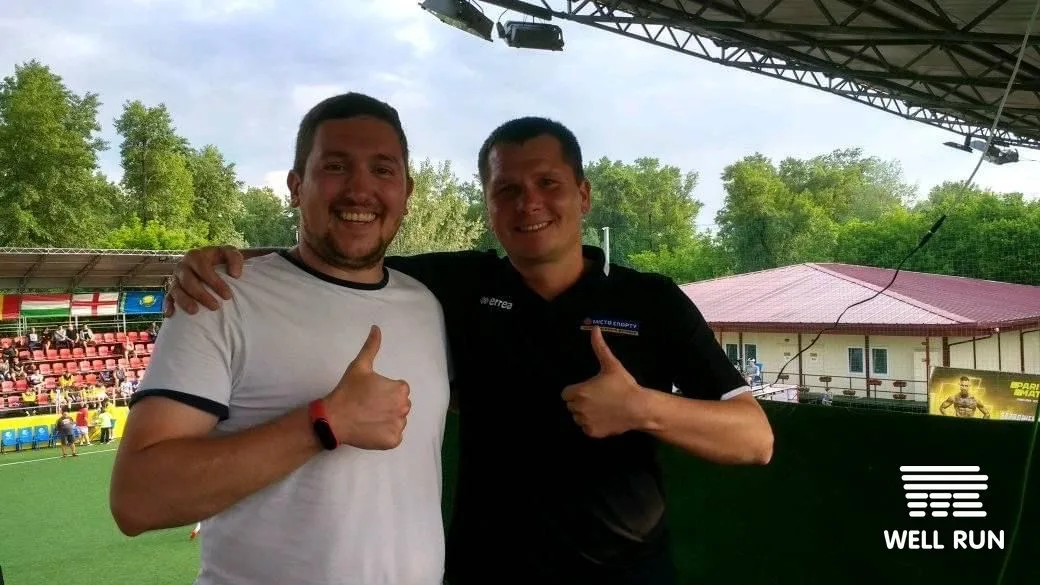
Andrew Kuznezov and Sergei Ruzhutskiy smiling thumbs-up at Hydropark Arena outdoor football venue Kyiv
Andrew Kuznezov and Sergei Ruzhutskiy at Hydropark Arena, Kyiv.

Twenty weeks, outdoors, four cameras. You do not crew that the way you crew a final. — Kostiantyn Moseichenko, Well Run

Kostiantyn Moseichenko — Well Run

03 — The setup

03 — The setup

Competition
Superball — Socca championship of Ukraine, 6×6
Organiser
Mistosporty
Venue
Hydropark Arena, Kyiv — outdoor
Season
2019/2020, opened 13 September 2019, 20 weeks
Format
10 clubs, home and away, then finals — 18 rounds of 5 matches
Production
4-camera multicam, live cut, instant replay, one continuous feed per round
Television
Xsport, Sport 1, Setanta Sports — by fixture
Digital
YouTube and Facebook, every round
Graphics
Full TV package, designed and animated by Well Run
Crew
A compact crew, rotating across the season
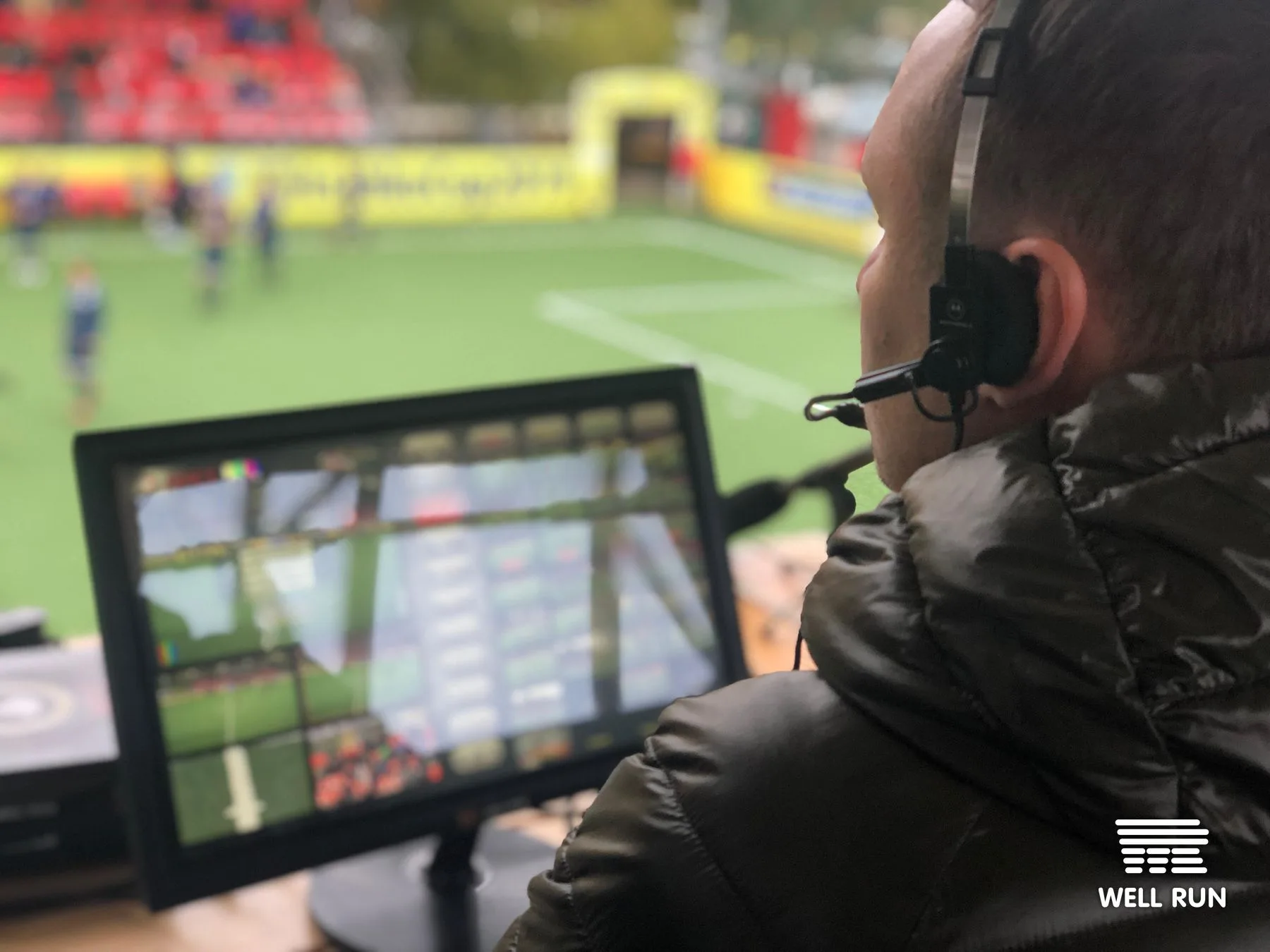
Dmytro Apilat wearing headset watches multiview monitor overlooking Hydropark Arena Superball pitch
Dmytro Apilat on live cut duty, Hydropark Arena, Kyiv.
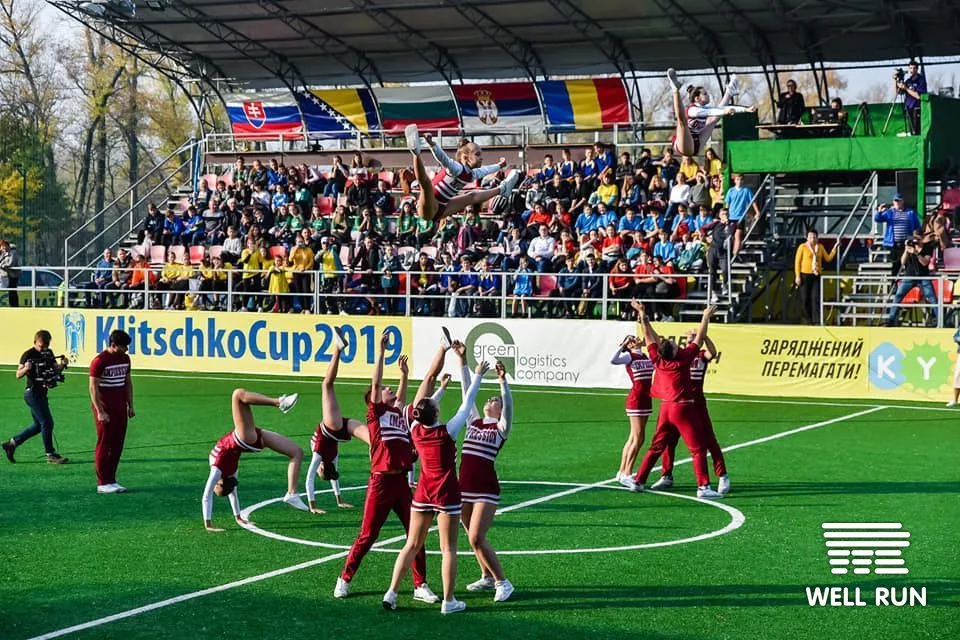
Cheerleaders toss teammate into air on green pitch at Hydropark Arena, Kyiv, crowd watching — frame 1
Kostiantyn Moseichenko operating multicam broadcast desk pitchside at Hydropark Arena Kyiv during Superball Socca championship — frame 2
Andrew Kuznezov and Sergei Ruzhutskiy smiling thumbs-up at Hydropark Arena outdoor football venue Kyiv — frame 3
Dmytro Apilat wearing headset watches multiview monitor overlooking Hydropark Arena Superball pitch — frame 4
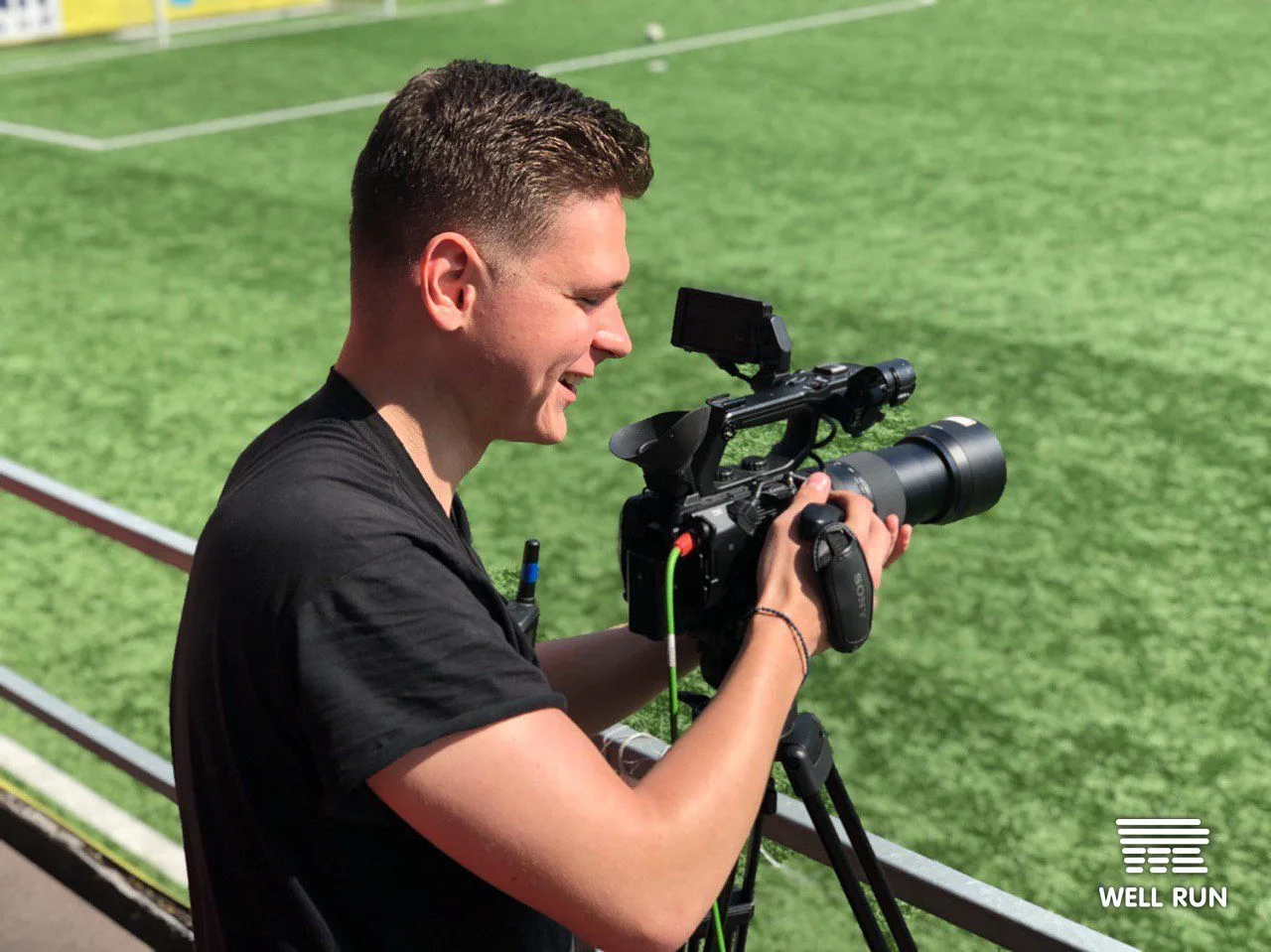
Semen Ponomarenko smiling while operating a Sony camera on tripod at Hydropark Arena, Kyiv — frame 5
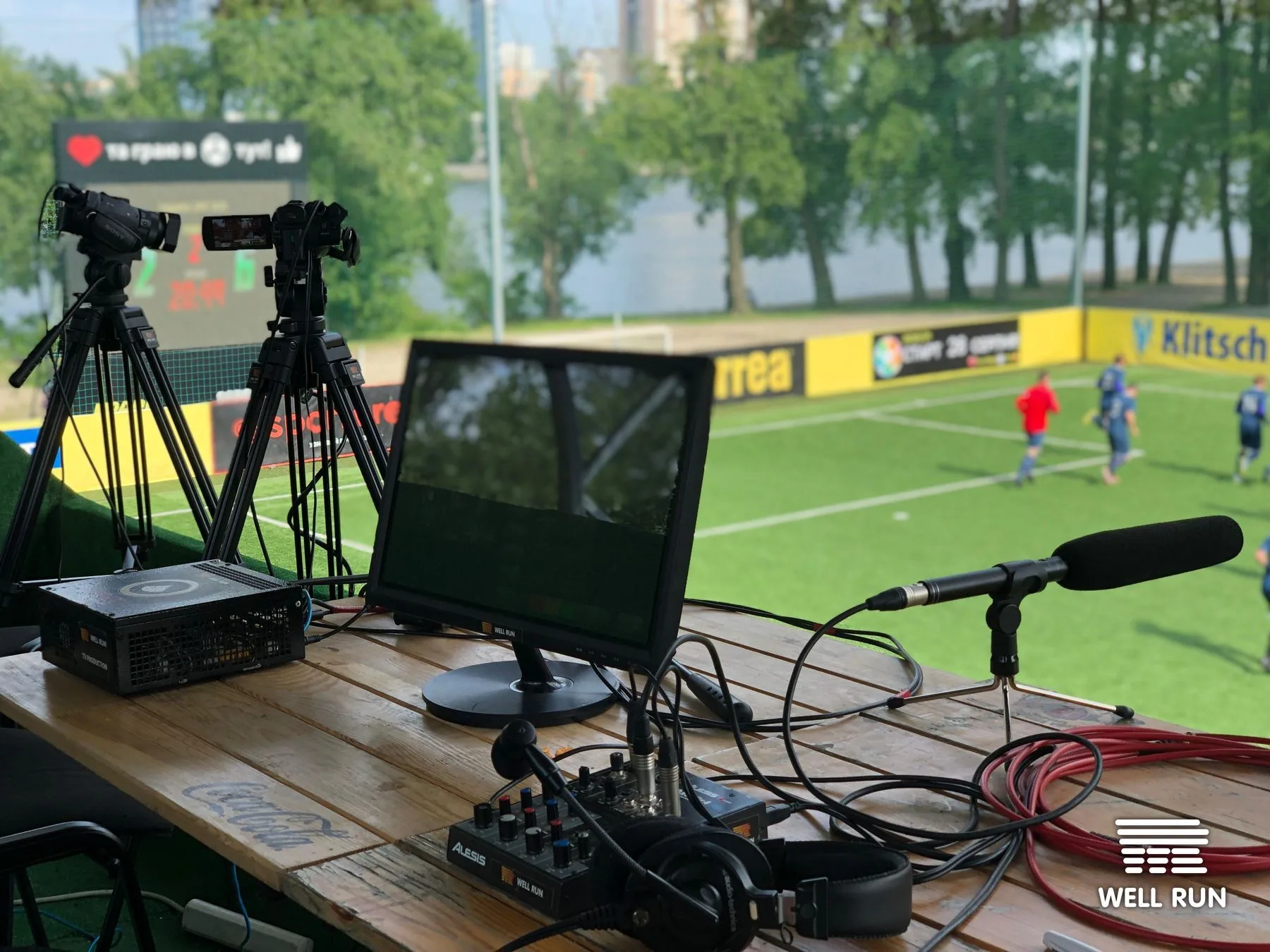
APEX OS production hardware, monitor, audio mixer, shotgun mic and cameras at Hydropark Arena pitch-side — frame 6
04 — The outcome

04 — The outcome

The championship was produced in full. Every round, every Friday, for twenty weeks, on television and on the competition's own channels at the same time.

Three national broadcasters carried Superball that season. The clubs whose fixtures they did not take were produced to the same standard, with the same graphics, on the same feed.

The number that matters is not four cameras or three channels. It is twenty — twenty consecutive weeks without a round missed, delivered by a crew that rotated through the season rather than an outside broadcast operation parked on the competition's budget for five months.

That is the difference between covering a match and running a championship.

The same season, at the same arena, we also produced the Marakana League — the championship of Kyiv — on Saturdays and Sundays. One engagement, two competitions, for one organiser.

Questions, answered

How many matches did Well Run produce across the Superball season?

Around ninety league matches plus the finals. Ten clubs playing home and away is eighteen rounds of five, produced across twenty weeks from September 2019.

Was each match a separate broadcast?

No. Each round went out as one continuous feed — four hours or more, from the first whistle of the evening to the last, with live cutting, replays and graphics throughout.

Where did the matches go?

Xsport, Sport 1 and Setanta Sports each carried fixtures across the season, and every round went live to Superball's YouTube and Facebook channels in parallel.

What was involved in producing outdoors across a full season?

Hydropark Arena is an open ground. A four-camera rig was built and struck every week from September onwards, through changing light and weather, and the broadcast had to look like the same competition in week twenty as it did in week one.

The service behind this case

Broadcast & Live Streaming

Federation-standard live production, TV graphics, and multi-platform delivery — built to run a season, not a single fixture.

More from the record
Your project next

Running a championship with a full fixture list?

Tell us how many rounds, how many clubs, and which fixtures television is taking.