Sports Federation Broadcast

A city championship, produced like a televised one

The Marakana League is the Kyiv championship at 6×6. Across the 2019/2020 season we produced every match of it — five on Saturday, five on Sunday, single camera, with instant replays and the full TV graphics package running on all of them.

Client
Marakana League — championship of Kyiv, 6×6 · Маракана-ліга. Чемпіонат Києва
Location
Hydropark Arena, Misto Sportu complex, Hydropark, Kyiv — outdoor
Engagement
2019/2020 season — 20 weeks, 200 matches
Service
Live broadcast production, TV graphics, social distribution
Date
2019/2020 season
At a glance

A city league does not get televised — that is not a judgement about the football, it is arithmetic: no broadcaster is buying ten matches a weekend from a regional competition, so the clubs in it get a phone on a tripod, or they get nothing.

Marakana got a broadcast — five matches on Saturday, five on Sunday, every weekend for twenty weeks, produced live to the competition's own channels with instant replays and the same TV graphics package we built for the national championship playing on the same ground the night before.

Client
Marakana League — championship of Kyiv, 6×6 · Маракана-ліга. Чемпіонат Києва
Organiser
Mistosporty
Venue
Hydropark Arena, Misto Sportu complex, Hydropark, Kyiv — outdoor
Season
2019/2020 — 20 weeks, 200 matches
Schedule
5 matches Saturday, 5 matches Sunday
Cameras
1 per match, by design
Distribution
Competition's own social channels, live
Service
Live broadcast production, TV graphics, social distribution
Watch
200matches across the season
10every weekend, over two days
1camera per match, by design
20weeks, nothing skipped
01 — The brief

The brief

Mistosporty runs both competitions at its complex in Hydropark, on Dolobetsky Island in Kyiv. Superball, the national championship, plays on Friday and goes to national television. Marakana, the championship of Kyiv, plays Saturday and Sunday and does not.

That second competition is where most sport actually lives, and where most sport is invisible. Ten fixtures a weekend for twenty weeks, clubs whose players work all week, an audience of people who know the players personally and cannot get to the ground. The demand is real. The budget for a four-camera outside broadcast is not. So the question was not whether to cover Marakana to a lower standard. It was which single thing to remove.

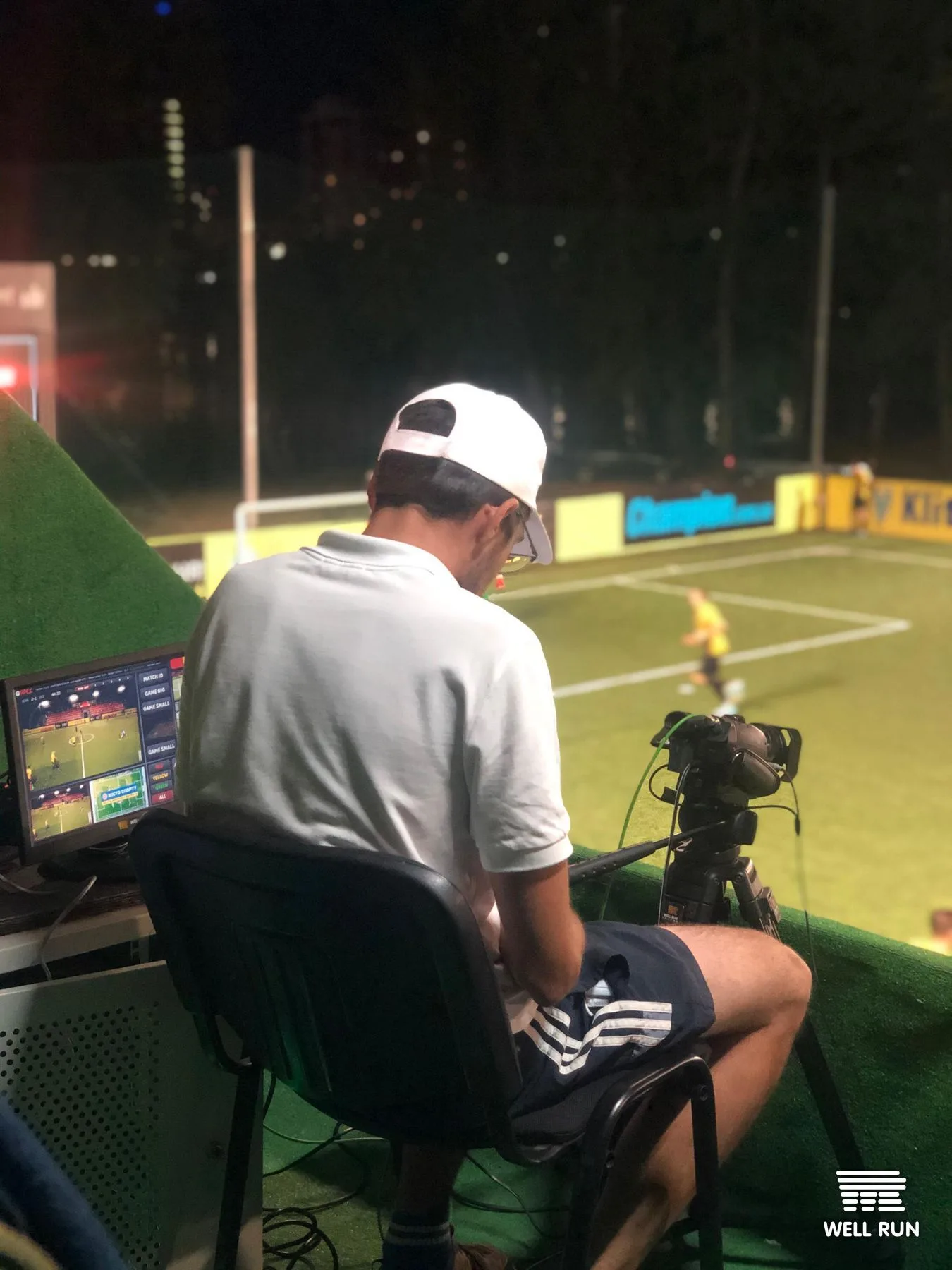
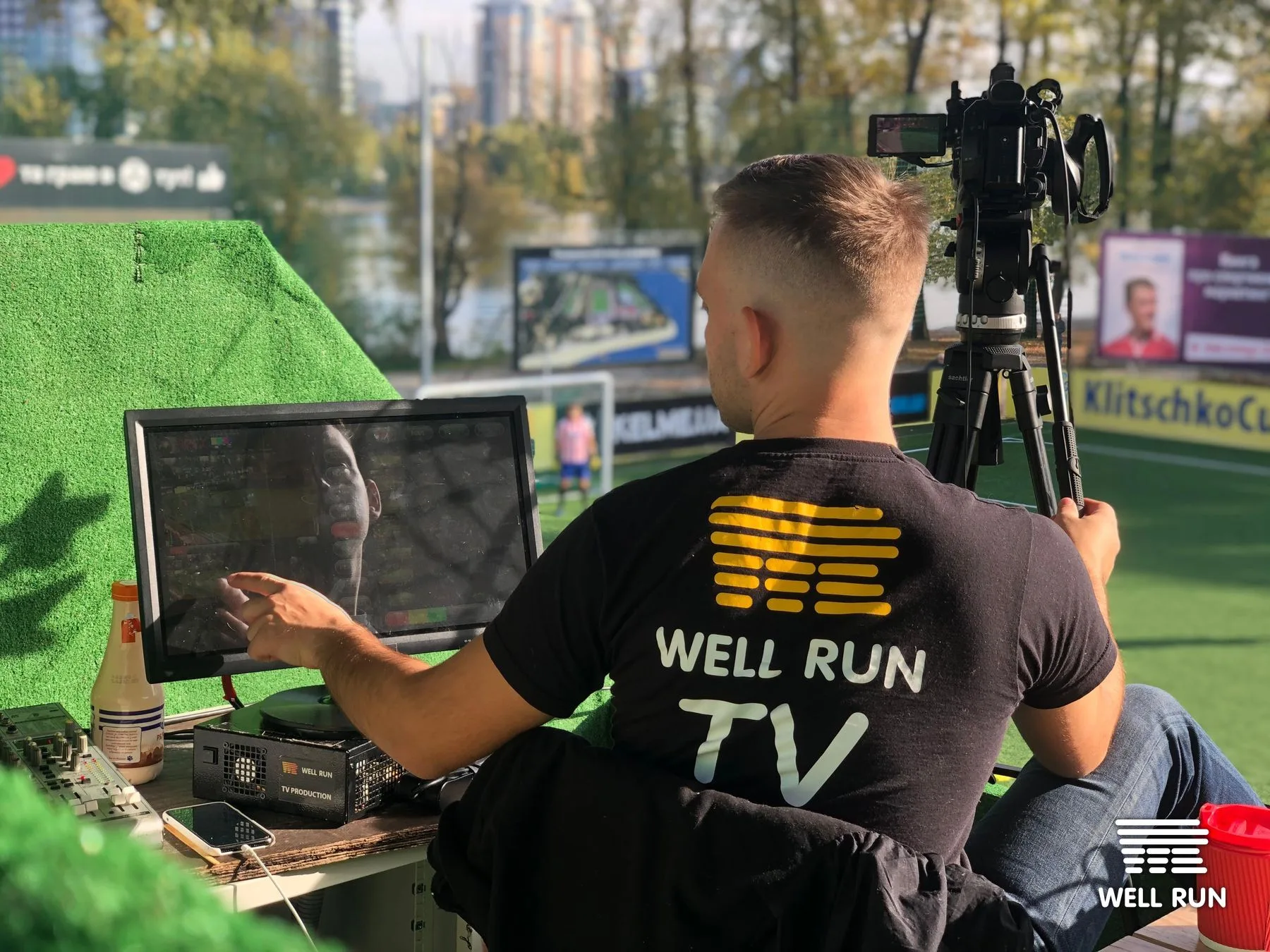
Well Run TV crew member at outdoor monitor station adjusting camera on tripod at Hydropark Arena Kyiv
Live single-camera production at Marakana League, Hydropark Arena Kyiv
02 — What we did

What we did

  1. 01

    One camera, and only one thing removed

    The camera count is the cost. Everything downstream of it — the live cut, the replays, the graphics, the delivery — costs the same whether four cameras are feeding it or one. So we took the cameras down to one and left the rest of the production intact. The result is not a phone video of a football match. It is a broadcast that happens to have one angle. Ten matches a weekend, run by one person. The graphics, the replays and the delivery are the system's job, not the crew's — which is what makes the economics work at this volume.

  2. 02

    Instant replays, on a single angle

    A replay from one camera is still a replay. The goal you missed, the save you did not see properly, the moment the crowd reacted to — all of it comes back, in the broadcast, seconds later. At ten matches a weekend the marginal cost of having replay available is close to nothing, and the difference it makes to how the coverage feels is not.

  3. 03

    The same graphics as the national championship

    We ran the full TV package on every Marakana match — scores, clocks, club identities, competition framing. The same standard of on-screen presentation that Xsport and Setanta Sports were taking from the Friday fixtures. A Kyiv club playing on Sunday afternoon appears on screen looking like a club in a national championship, because on screen it is one.

  4. 04

    Every fixture, every weekend

    Two hundred matches across the season, with nothing skipped. In a city league that matters more than it does higher up. There is no highlights show and no newspaper covering these clubs — if the match is not produced, it did not visibly happen.

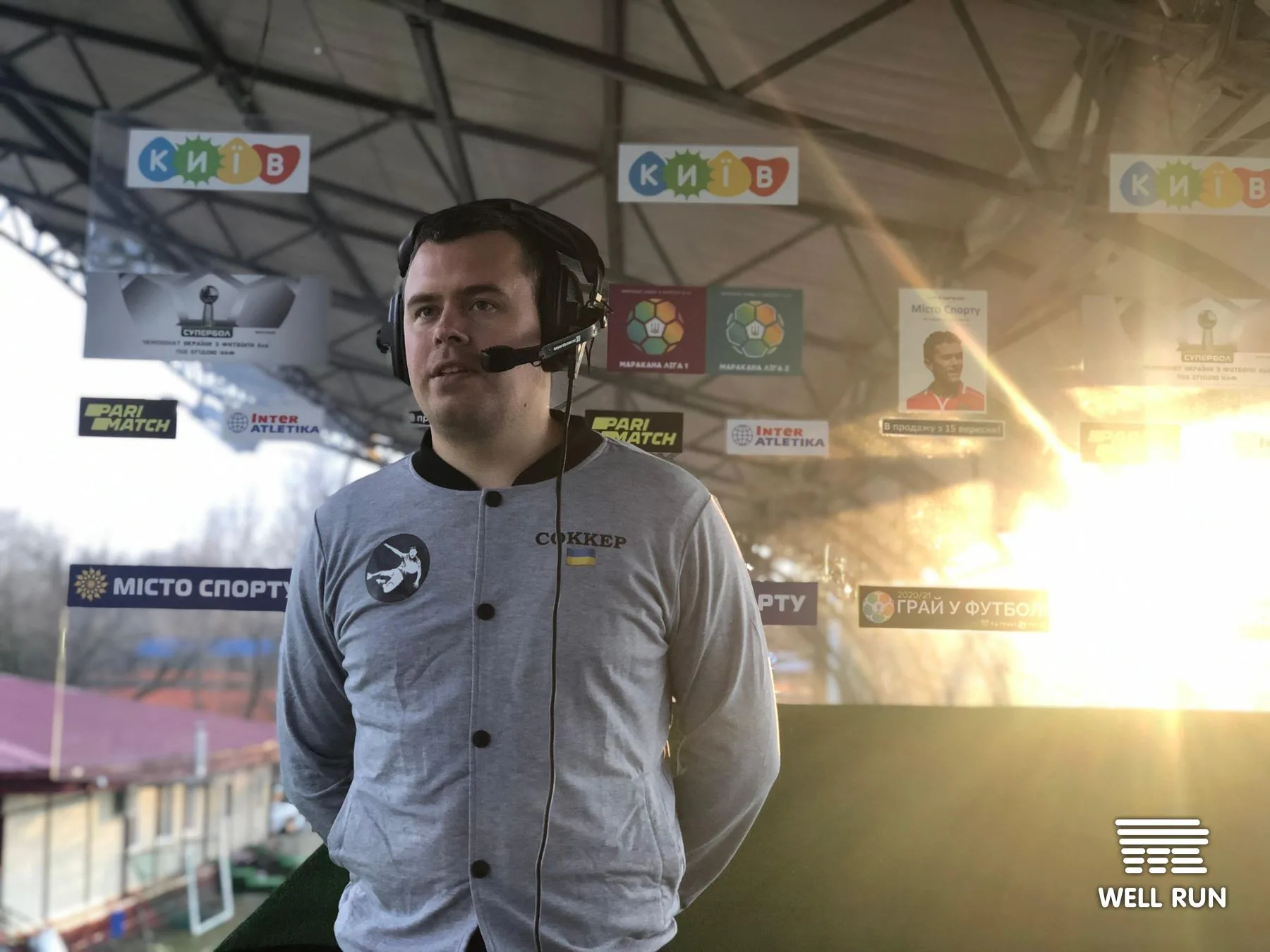
Commentator wearing headset and Socker jacket at outdoor Hydropark Arena, Kyiv, sunset behind
Live commentary at Hydropark Arena, Marakana League 2019/2020

The camera count is the budget. Everything else is a decision.

Kostiantyn Moseichenko — Well Run

03 — The setup

The setup

Competition
Marakana League — championship of Kyiv, 6×6 · Маракана-ліга. Чемпіонат Києва
Organiser
Mistosporty
Venue
Hydropark Arena, Misto Sportu complex, Hydropark, Kyiv — outdoor
Season
2019/2020 — 20 weeks, 200 matches
Schedule
5 matches Saturday, 5 matches Sunday
Production
Single camera, live cut, instant replay
Graphics
Full TV package — scores, clocks, club identities, competition branding — designed and animated by Well Run; same package as the national championship
Distribution
The competition's own social channels, live
Crew
One operator per match day — Kostiantyn Moseichenko, Semen Ponomarenko or Mykola Charchenko, rotating across the season
Camera operator seated at outdoor pitch-side desk, monitoring broadcast screen beside tripod-mounted camera
Single-camera live production at Hydropark Arena, Kyiv.
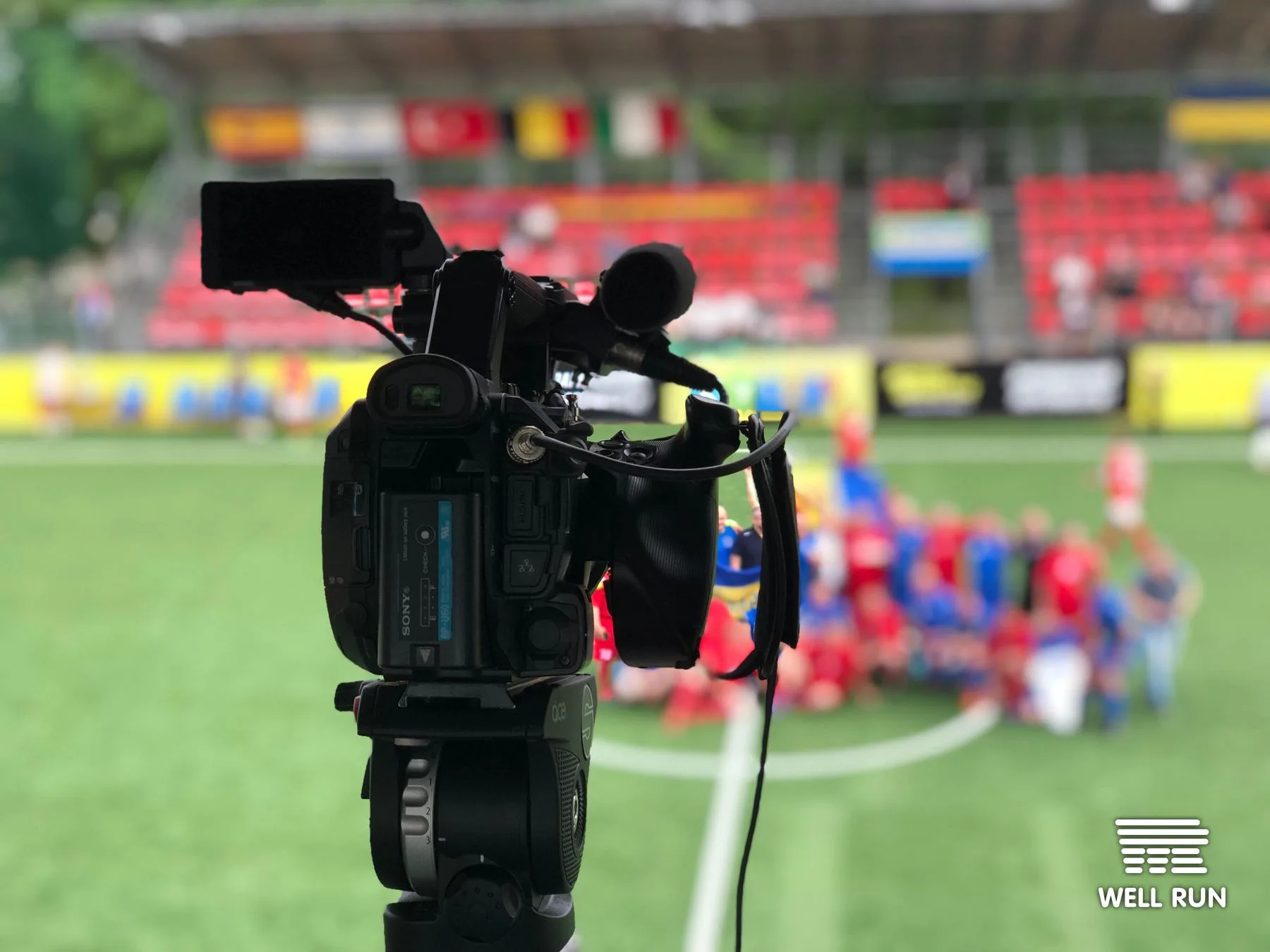
Sony broadcast camera on tripod at Hydropark Arena, players gathered on 6x6 pitch behind — frame 1
Well Run TV crew member at outdoor monitor station adjusting camera on tripod at Hydropark Arena Kyiv — frame 2
Commentator wearing headset and Socker jacket at outdoor Hydropark Arena, Kyiv, sunset behind — frame 3
Camera operator seated at outdoor pitch-side desk, monitoring broadcast screen beside tripod-mounted camera — frame 4
04 — The outcome

The outcome

Every match of the Kyiv championship was produced and published, both days, every weekend of the season — two hundred matches in twenty weeks.

That is more than twice the national championship's ninety. The competition television was not taking turned out to be the larger production, which is usually true and almost never budgeted for.

The clubs got footage of themselves that looks like sport rather than like a recording. The competition got an archive instead of a results table. And Mistosporty got both of its competitions covered by one crew, at the standard each of them could carry — a four-camera television broadcast on Friday, a single-camera production Saturday and Sunday, with the same graphics and the same crew across all three days.

That is the useful lesson for anyone running a competition below the television line. You are not choosing between broadcast quality and covering everything. You are choosing how many cameras.

Questions, answered

How many matches did Well Run produce for the Marakana League?

Two hundred. Ten every weekend — five on Saturday and five on Sunday — across twenty weeks of the 2019/2020 season, with no fixture left uncovered.

Why single camera?

Because the camera count is where the cost is. The live cut, the replays, the graphics and the delivery cost the same on one camera as on four, so reducing the rig to one camera is what makes ten matches a weekend affordable without lowering the standard of everything else.

Did the Marakana matches get the same graphics as the national championship?

Yes. The full TV package we designed for the competition ran on every match — the same one used on the Friday fixtures that Xsport and Setanta Sports were carrying.

Where were the matches published?

To the competition's own social channels, live, with replays and graphics as broadcast.

The service behind this case

Broadcast & Live Streaming

Federation-standard live production, TV graphics, and multi-platform delivery — scaled to what each competition can carry.

More from the record
Your project next

Running a competition television is not taking?

Tell us how many fixtures a weekend, and we will tell you what one camera can do with them.