FIBA-standard basketball broadcast to national TV Kyiv, January 2017
Three cameras, a proprietary internet pipeline, and a live signal to Sport 1 — one of our earliest national-TV broadcasts, and the first real test of what would become APEX.
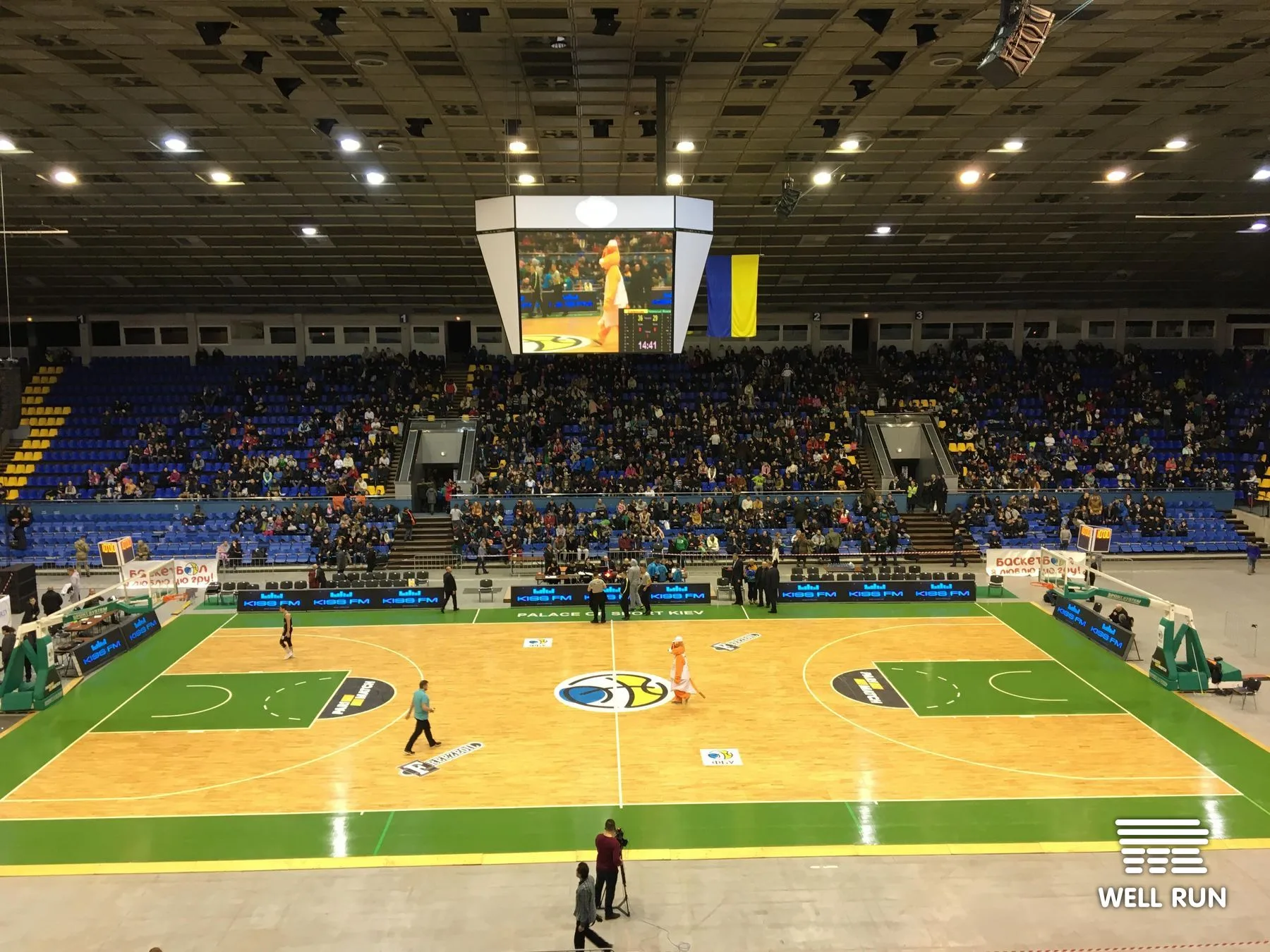
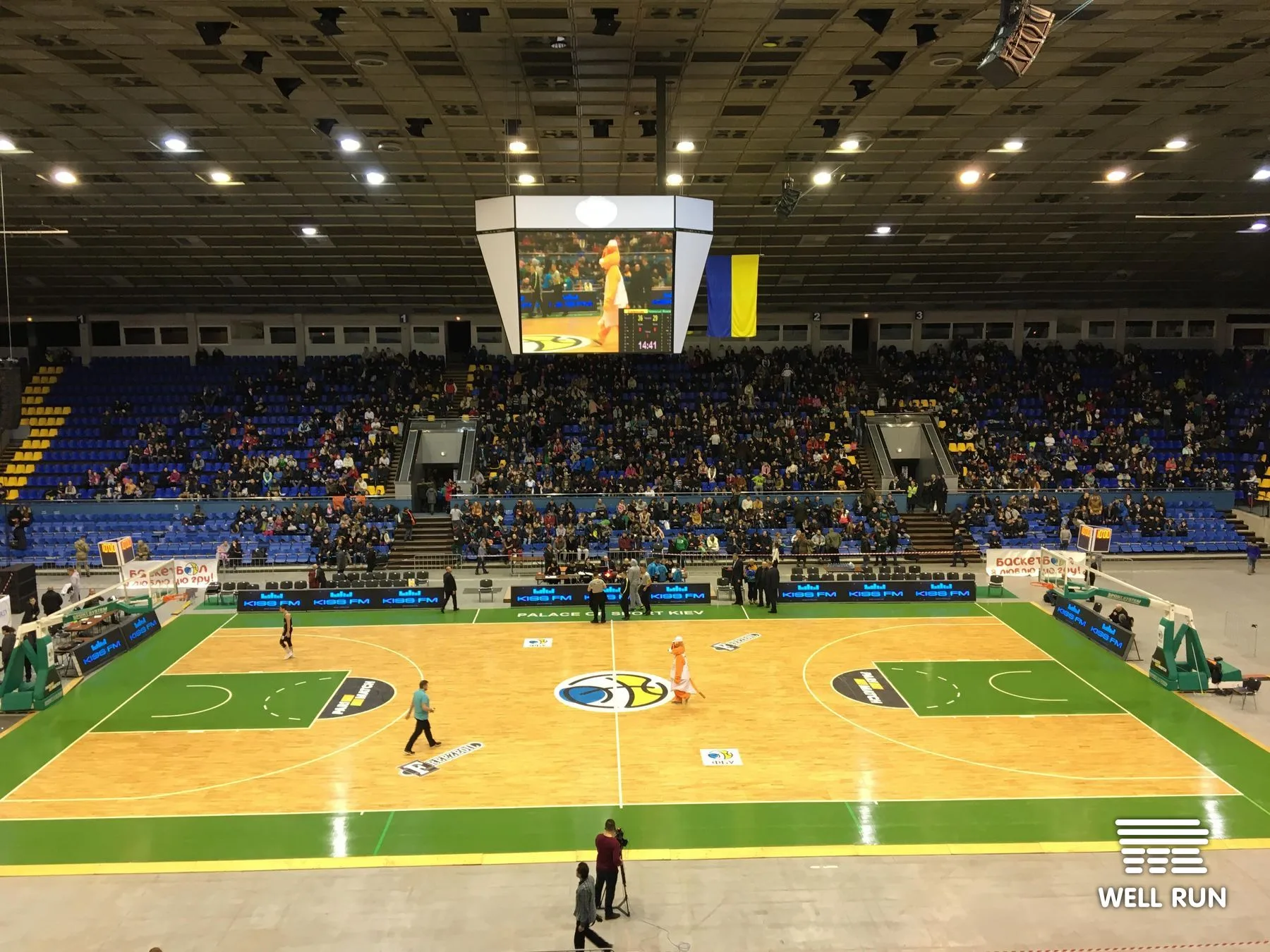
BK Budivelnik vs BC Cherkaski Mavpy, broadcast live to Sport 1 at FIBA production standard from a 3-camera setup at the Palace of Sport, Kyiv.
The signal travelled over a proprietary in-house internet pipeline — an early version of the infrastructure that would later become APEX.
Basketball Federation of Ukraine needed a FIBA-standard live broadcast of BK Budivelnik vs BC Cherkaski Mavpy delivered to Sport 1 — Ukraine's national sports channel — from the Palace of Sport in Kyiv on 14 January 2017.
The production had to meet FIBA's camera and graphics requirements and reach the broadcaster reliably over an internet signal path. At the time, that path was built on our own proprietary encoder: an early iteration of the technology that would later evolve into the Restream infrastructure and, eventually, APEX.
We positioned three Sony NX5 cameras in the standard FIBA configuration — a wide shot covering the full court, a close-up on the action, and a central close-up that also served as the slow-motion replay camera.
Graphics overlays — scores, clocks, team names — were applied in real time via alpha-channel compositing from a dedicated PC, meeting FIBA's on-screen presentation requirements.
The second camera, operated by Kostiantyn Moseichenko and others, used the Sony NX5's built-in last-5-seconds replay buffer. When a moment was worth showing again, he called 'I got it' and director Dmytro Opelat cut to the replay — a simple, reliable system that kept the production moving.
The mixed signal was encoded by our proprietary in-house encoder and transmitted live to Sport 1 over an internet path. This was one of the first times that pipeline carried a national-TV signal — a real-conditions test that informed everything we built afterward.
He called 'I got it' and the director cut — a simple system, and it worked every time.
Kostiantyn Moseichenko — Well Run
The broadcast met FIBA production standards and was transmitted live to Sport 1 without interruption. For us, it was more than one game — it was the first national-TV proof that our own encoder and internet-signal pipeline could hold under real broadcast conditions.
That pipeline is now APEX. This match is where it started earning its place.
Yes. The production followed the FIBA camera layout — wide, close-up, and central close-up — with real-time graphics overlays and slow-motion replay, meeting the federation's on-screen presentation requirements.
We encoded the mixed signal with our own proprietary encoder and transmitted it to Sport 1 live over an internet path. This was an early version of the infrastructure that later became the Restream system and, eventually, APEX.
Three Sony NX5 cameras — one on the wide shot, one on close-up, and one in the centre position that also handled slow-motion replay using the camera's built-in last-5-seconds buffer.
Yes. We have delivered FIBA-standard productions for the Basketball Federation of Ukraine and other federation clients across Europe. This 2017 broadcast was one of our earliest, and the technology we tested here has been in production use ever since.
The service behind this case
Federation-standard live production and national-TV signal delivery, built on owned encoding and distribution infrastructure.
We've been delivering federation-standard productions to national broadcasters since 2017. Tell us what you need.